Destination Guide

Turkey

Turkey, officially Türkiye, spans Thrace and Anatolia between the Aegean, Mediterranean and Black seas, with Istanbul on the Bosphorus as its largest city.

Explore Turkey on map

Destinations covered

8

Published guides

55

Region

Travel guide

Explore Turkey

Start with the places that shape the country.

Discover cities, regions and experiences worth building a trip around, then go deeper with practical guides and local context.

Start here

A place to begin in Turkey

City

Antalya

Antalya is a Mediterranean port city whose old harbour town, Kaleiçi, was founded as Attaleia by Attalos II of Pergamon and is entered through a marble gate built in AD 130 for the emperor Hadrian. It is the base for the Konyaaltı and Lara beach strips and for separate road trips to the ancient cities of Perge, Aspendos, Side, Termessos and Phaselis.

Best time

The Turkish State Meteorological Service's long-run statistics for Antalya (data range 1930–2025) show a hot, almost rainless summer and a mild, wet winter. July and August average daily highs of 34.2°C and 34.1°C, the station has recorded 45.0°C in July, and each of those months averages about half a rainy day and under 5 mm of rain. June (average high 30.8°C) and September (31.2°C) are already hot. April, May and October are the months where average highs sit between 21.4°C and 26.6°C and rain is well below winter levels: 6.4, 5.2 and 5.4 rainy days, against 12.4 in January and 11.9 in December. Winter is mild rather than cold, with average highs of 15.0–16.7°C from December to February, but it is the wet season: December averages 250.9 mm and January 225.5 mm. Sunshine falls from 11.7 hours a day in July to 4.8 in December. Two seasonal limits are officially sourced: the municipal Lara public beach lists an operating season of 15 May to 30 September, and the UK FCDO warns that wildfires happen frequently in Turkey in summer, with a high risk from April to October. Sea temperatures could not be retrieved from a primary source and are not stated.

Recommended stay

No official source prescribes a length of stay, so this is planning arithmetic from sourced figures rather than an authority's recommendation. The city sights cluster in two places: Kaleiçi, where the municipality's own catalogue runs to dozens of monuments along streets such as Hesapçı Sokak, and the Konyaaltı coast, where the aquarium alone takes one to two hours and three to five with its extras. Every ancient site is a separate outing: Perge (18 km) and Aspendos (48 km) both lie east of the city, Termessos is off the Antalya–Korkuteli highway, Phaselis and Olympos are on the Antalya–Kumluca road beyond Kemer, and Side is beyond Manavgat (65 km from the airport). Perge and Aspendos share a direction, so combining them is realistic; Termessos and Phaselis lie on different roads.

Explore Antalya →

Keep exploring

More destinations in Turkey

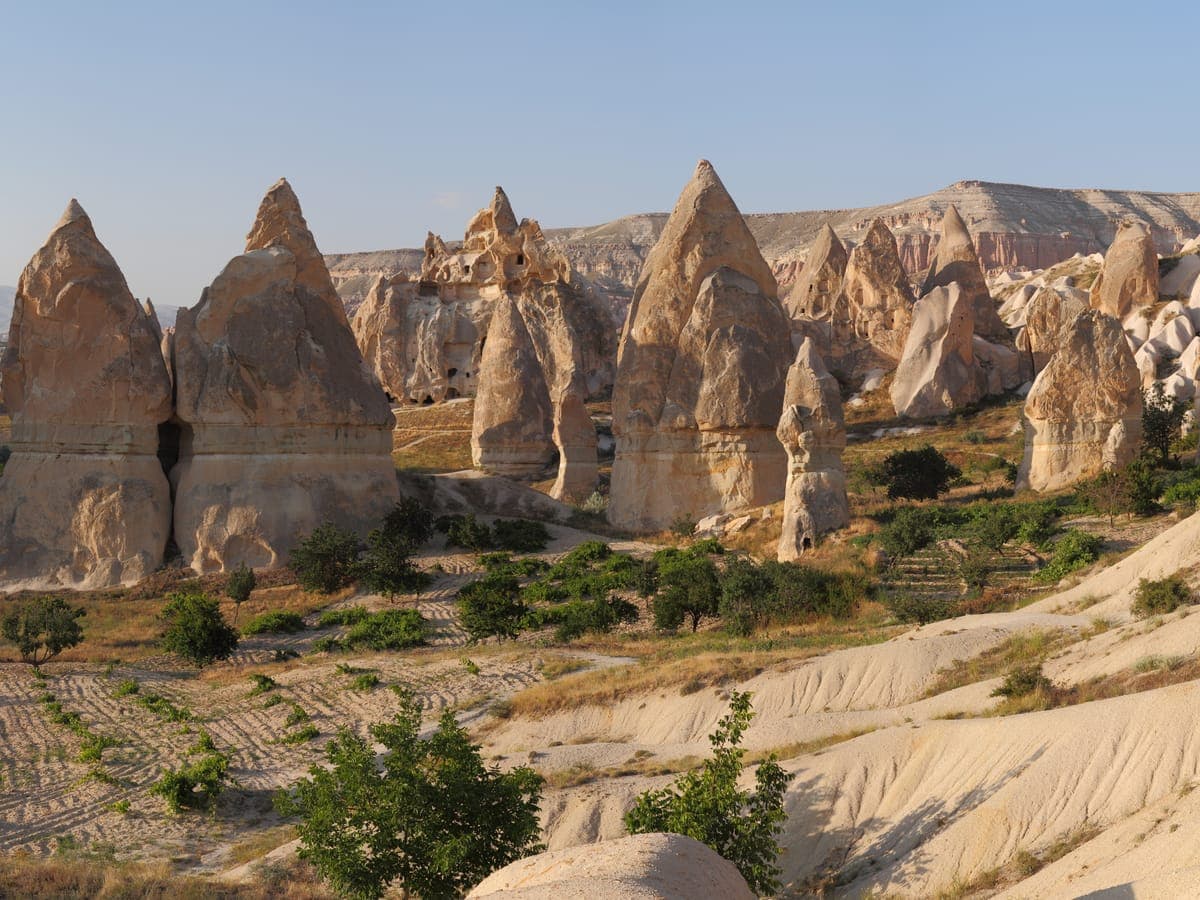
A dense field of tall, cone-shaped fairy-chimney rock formations rising from an orchard valley in Cappadocia, central Turkey.
Region01

Cappadocia

Cappadocia is a region of central Türkiye, mostly in Nevşehir Province, where volcanic tuff has eroded into valleys and rock pinnacles known as fairy chimneys. People cut churches, dwellings and whole underground settlements into the rock from about the 4th century. UNESCO inscribed Göreme National Park and the Rock Sites of Cappadocia in 1985; the property includes the underground cities of Kaymaklı and Derinkuyu. Three Ministry-run sites anchor a first visit: the Göreme Open Air Museum, Kaymaklı Underground City and the Zelve-Paşabağları site.

Explore destination →

City02

Istanbul

Istanbul is the city the Bosphorus divides between Europe and Asia, with the Golden Horn cutting into its European shore. Its Historic Areas (the Sultanahmet archaeological park, the Süleymaniye quarter, Zeyrek and the Land Walls) are a UNESCO World Heritage property inscribed in 1985, and a visit sorts naturally into the old city, the European Bosphorus shore around Beyoğlu, and Üsküdar and Kadıköy across the water.

Explore destination →

City03

Kars

Kars is a high-plateau city in north-eastern Türkiye, at about 1,768 m, and the base for the ruined medieval city of Ani on the Armenian border. It has its own castle, two Ministry museums, a 10th-century church-turned-mosque and a grid of Russian-era stone buildings, and a rail link to Ankara.

Explore destination →

Historic town04

Safranbolu

Safranbolu is a town in Karabük Province whose Ottoman-era quarters form the UNESCO World Heritage property 'City of Safranbolu'. The Ministry of Culture and Tourism describes a two-part town — Çarşı, the winter quarter, and Bağlar, the summer quarter, about 4 km apart — with some 1,500 protected buildings, and it is the base for İncekaya Aqueduct and the village of Yörük Köyü.

Explore destination →

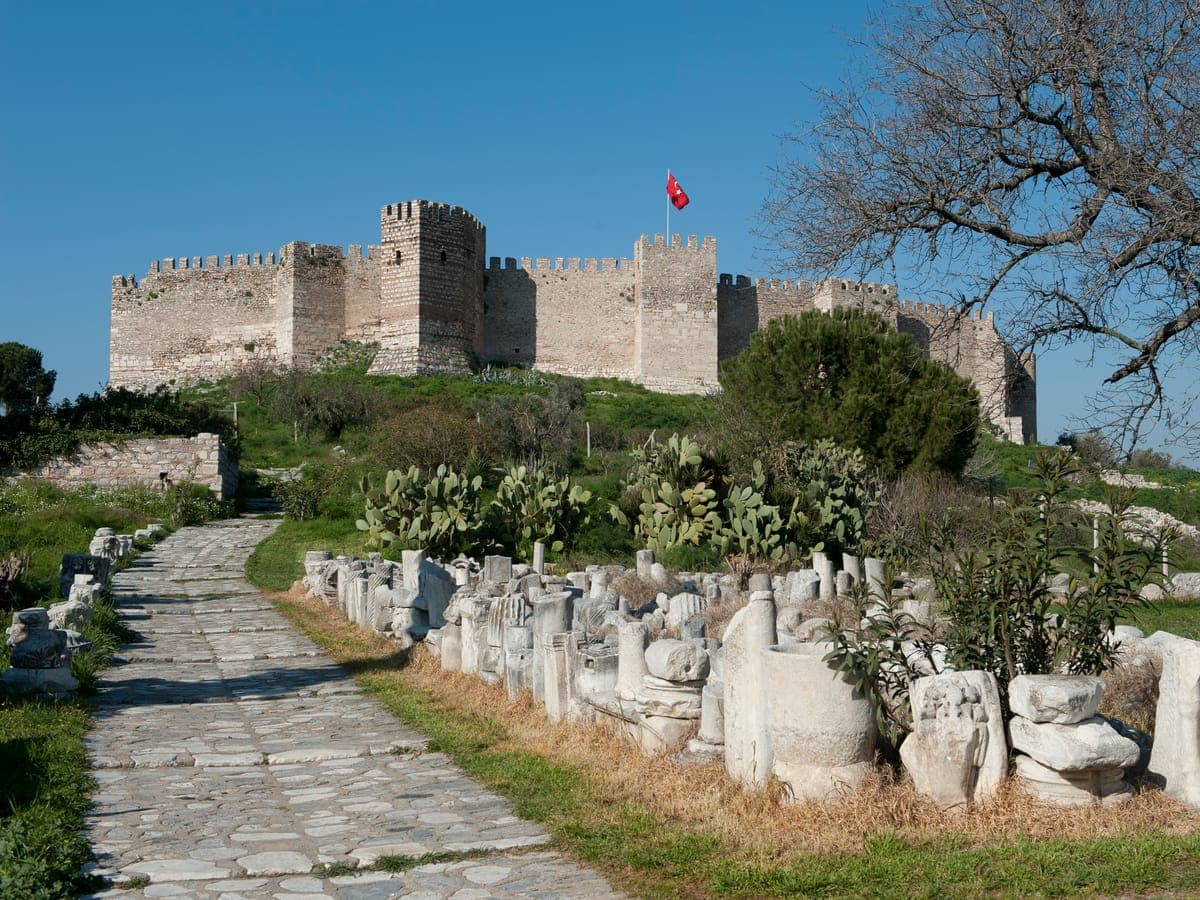
The crenellated stone walls and towers of Selçuk Castle on Ayasuluk Hill, flying a Turkish flag, approached past ancient marble column fragments.
Town05

Selçuk

Selçuk is a town and district in İzmir province on the Aegean coast, the base for visiting the ancient city of Ephesus. Its own monuments sit around Ayasuluk Hill, where the Basilica of St John stands, and the Ephesus Museum, run by the Ministry of Culture and Tourism, is in the town. UNESCO inscribed Ephesus in 2015 as a property of four separate components, and the visitor-facing Ministry sites are only some of them.

Explore destination →

City06

Trabzon

Trabzon is the main city of Türkiye's eastern Black Sea coast and the base for Sümela Monastery and Uzungöl. In the city itself are the 13th-century Hagia Sophia of Trabzon, the Ministry's Trabzon Museum in the Kostaki Mansion, the small St Anna church, and the Boztepe viewing terrace above the harbour.

Explore destination →

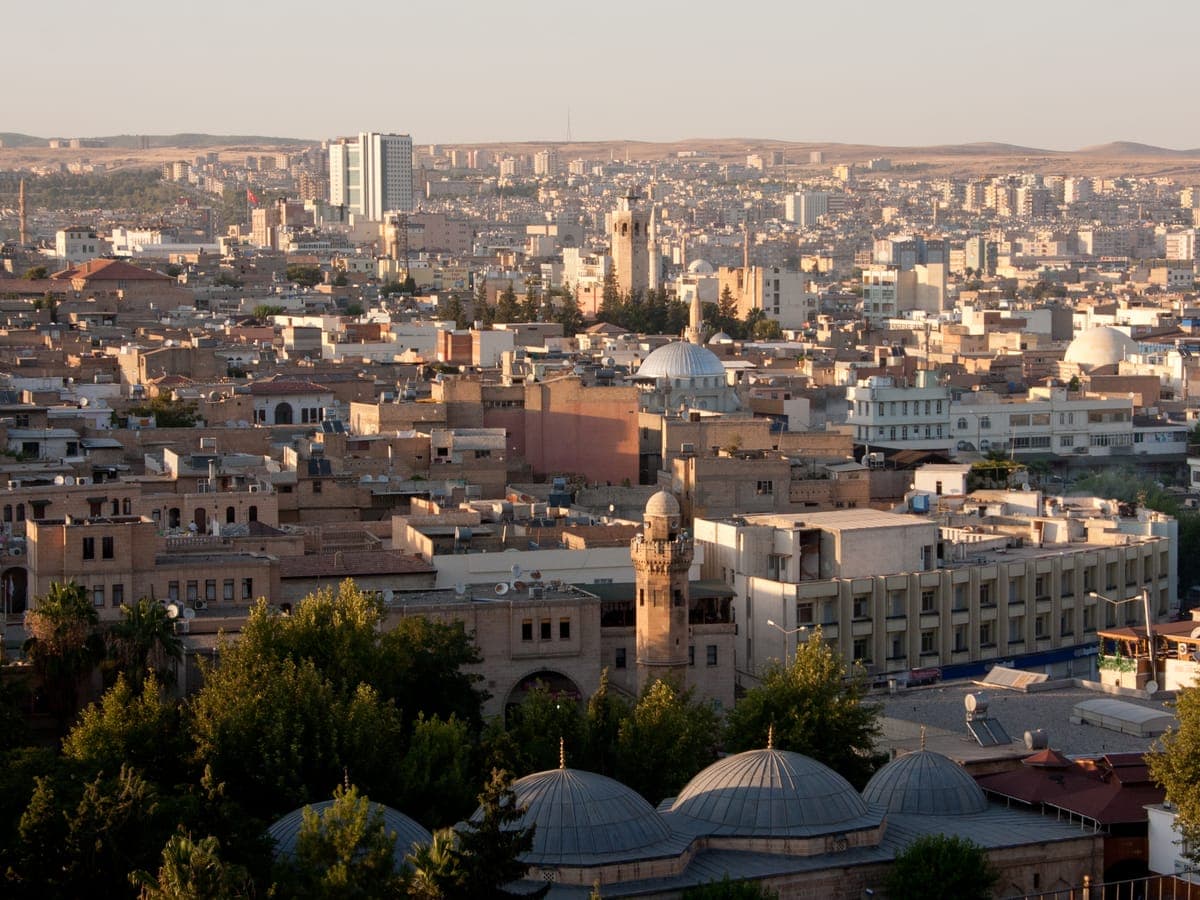
Golden-hour skyline of Şanlıurfa's old town, with domed mosque roofs and a minaret in the foreground against the wider city and surrounding hills.
City07

Şanlıurfa

Şanlıurfa, also called Urfa, is the base for Göbekli Tepe, the Pre-Pottery Neolithic hilltop site on the UNESCO World Heritage List, and for the Ministry's Şanlıurfa Archaeology Museum and Haleplibahçe Mosaic Museum. Its old core also holds Balıklıgöl, a pilgrimage site tied to the Prophet Abraham. Several heritage units around it are closed or under restoration, and they need checking one by one.

Explore destination →

Plan better

Guides to Turkey

Travel Guide01

Safranbolu and İncekaya Aqueduct: a Karabük two-stop guide

Safranbolu is Turkey's best-preserved Ottoman townscape, a UNESCO World Heritage Site across three historic quarters. İncekaya Aqueduct, an 18th-century stone aqueduct in a canyon just outside town, makes a natural short add-on — but its own hours and fee are genuinely unconfirmed by any primary source, and it is not the same thing as the newer Cam Teras glass terrace above it. This guide sets out what is confirmed about each, and what isn't.

Sep 2026

Read guide
Travel Guide04

Hagia Sophia, Trabzon: visitor guide (not Istanbul's)

Hagia Sophia, Trabzon (Ayasofya Camii) is a 13th-century Byzantine church-turned-mosque on the Black Sea coast — a genuinely different building from the much more famous Hagia Sophia in Istanbul. This guide leads with that disambiguation, then covers what's confirmed: it is free to enter, with no separately-ticketed gallery, correcting a figure this project's own earlier research had flagged as suspect.

Sep 2026

Read guide
Travel Guide05

Sümela Monastery, Trabzon: visitor guide

Sümela Monastery is a Greek Orthodox monastery built into a cliff face above the Altındere valley, Trabzon Province, on UNESCO's Tentative List. According to the Ministry, visitors arrive by car and walk a forest path and a long staircase to the entrance. This guide covers the confirmed hours and monastery fee, and what is still unconfirmed: the park fee, any shuttle, and exactly where the path starts.

Sep 2026

Read guide
Travel Guide06

Ishak Pasha Palace, Doğubeyazıt: visitor guide

Ishak Pasha Palace is a large 17th–18th century Ottoman-era palace complex on a hill above Doğubeyazıt, Ağrı Province, in Turkey's Eastern Anatolia Region, mixing Ottoman, Persian, Seljuk, Armenian and Georgian architectural elements. This guide covers what the Ministry of Culture and Tourism confirms about hours, fees and access, and its UNESCO World Heritage Tentative List status (submitted 2000, not inscribed).

Sep 2026

Read guide
Travel Guide07

Karadeniz Ereğli Museum: a free museum on the Zonguldak coast (not the Konya one)

Karadeniz Ereğli Museum, in the four-story Halil Paşa Mansion on the Zonguldak Black Sea coast, is a free, Ministry-run museum with Greek, Roman, Byzantine and Ottoman collections by floor. Turkey has a second, unrelated museum with almost the same name in Ereğli district, Konya Province — this guide is about the Black Sea one, and says exactly how to tell them apart.

Sep 2026

Read guide
Travel Guide08

Amasra Castle and Amasra Museum: a walking guide to Bartın's old town

Amasra Castle and Amasra Museum are two separate, complementary landmarks in the small old town of Amasra, on Bartın Province's Black Sea coast — a free, gate-less Byzantine-and-Genoese fortress you can walk through any time, and a ticketed Ministry museum a short walk away covering five historical periods. This guide sets out what is confirmed about each: hours, fees, addresses and what is still unresolved.

Sep 2026

Read guide
Şanlıurfa09

Göbekli Tepe, the Şanlıurfa Archaeology Museum and the Haleplibahçe Mosaic Museum: three different places, one trip

Göbekli Tepe is a UNESCO World Heritage excavation site outside Şanlıurfa, not a museum. The Şanlıurfa Archaeology Museum and the Haleplibahçe Mosaic Museum are two separate buildings in the city, with two unrelated collections — Neolithic Göbekli Tepe finds in one, in-situ Roman-era mosaics in the other. This guide keeps the three apart and sets out what UNESCO, the Ministry of Culture and Tourism and Turkey's meteorological service publish about visiting each.

Sep 2026

Read guide
Cappadocia12

Göreme, Kaymaklı and Zelve: Cappadocia's open-air museums and underground city, explained

Göreme Open Air Museum, Kaymaklı Underground City and Zelve Open Air Museum sit within the same part of Cappadocia but are three genuinely different kinds of site: a museum of painted rock-cut churches, an underground refuge city, and an evacuated village valley. This guide sets out what the Ministry of Culture and Tourism publishes on each — hours, tickets, closures and what tells them apart — including why Göreme and Zelve, despite the similar name, are not the same place.

Sep 2026

Read guide

Before you go

Know enough to travel with confidence.

Our country and destination guides are designed to bring together practical information, accessibility, timing, culture and the details that make a trip easier to understand.