The Travel Library

Travel Guides

Practical planning, local context, food, culture and destination knowledge for making better choices before you go.

Explore

Latest guides

Edinburgh05

Edinburgh Castle and the Royal Mile: what is inside, how tickets work, and how they fit the Old Town

Edinburgh Castle is a ticketed Historic Environment Scotland site at the top of the Royal Mile; the Royal Mile is the Old Town street that runs from the castle down to the Palace of Holyroodhouse. This guide sets out what the castle holds, what its own ticket pages say about timed entry, flexi tickets and passes, where those pages disagree, and how both fit the Old and New Towns of Edinburgh World Heritage Site.

Read guide
Edinburgh06

Edinburgh's festivals as their organisers describe them: the International Festival, the Fringe, the Tattoo and Hogmanay

Edinburgh in August is several festivals run by different organisations, and what separates the International Festival from the Fringe is who chooses what is on stage. This article sets out, in each organiser's own words, what the Edinburgh International Festival, the Fringe, the Book Festival, the Royal Edinburgh Military Tattoo and Edinburgh's Hogmanay are, and which dates had been published when XTOUR checked on 11 October 2026.

Read guide
United Kingdom07

Caernarfon, Conwy, Beaumaris or Harlech: Edward I's World Heritage castles in Wales as Cadw describes them

Four castles and two sets of town walls built for Edward I in north Wales form one World Heritage Site, and Cadw, whose pages are signed as part of the Welsh Government, sells the tickets for all four castles. This guide sets out what Cadw's own pages say each castle is, how their tickets work and where Cadw's pages disagree with each other.

Read guide
United Kingdom10

Highland games and the Braemar Gathering: what happens, who runs them, and what the organisers' own pages say

Highland games are Scottish competitions of heavy throwing, running, jumping, dancing and piping, held in towns and villages across Scotland through the summer. This article explains the events and the governing association, then sets out what the Braemar Gathering's organiser says about its history, its tickets and its day, including the places where its own pages disagree.

Read guide
United Kingdom16

Scotch whisky: what the law protects, from 'single malt' to Speyside and Islay

'Scotch Whisky' is a legal definition, set out in the Scotch Whisky Regulations 2009 and protected as a UK geographical indication. This article reads the regulations directly: what a whisky must be to carry the name, what the five category names on a label mean, which place names are protected and how the law draws their boundaries, and what a few common label words do and do not promise.

Read guide
United Kingdom17

The Scottish Register of Tartans explained: who runs it, what registration means, and which tartan you can wear

The Scottish Register of Tartans is the official register set up by an Act of the Scottish Parliament in 2008 and run by the National Records of Scotland. This article explains what the law defines as a tartan, what registering one involves and does not give you, how older tartans came onto the register, and what the register itself says about which tartan a person may wear.

Read guide
United Kingdom22

UK protected food and drink names: PDO, PGI, TSG and the two registers

Since the end of 2020 a British food name can be protected under the UK's own geographical indication schemes, the EU's, or both, and which one applies depends on whether it is sold in Great Britain or in Northern Ireland. This article explains the three food labels, reads what Defra's register and decision documents say about six named products, and records where the register and other government pages do not line up.

Read guide
London23

United Kingdom travel guide: where to base yourself, and what each base is for

London, in England, and Edinburgh, Scotland's capital, come first; Bath, York, Oxford, Cambridge and Canterbury are smaller English bases, each built around a World Heritage site, a cathedral or a university; Cardiff, Glasgow, Inverness, Belfast and Liverpool cover Wales, the rest of Scotland, Northern Ireland and the north-west of England. This guide says what each base is for, which well-known sights are reached from a base rather than in it, and what XTOUR does not state.

Read guide
Denpasar30

The three genres of Balinese dance: what UNESCO lists, and what is sacred

UNESCO inscribed the three genres of traditional dance in Bali in 2015: sacred wali, semi-sacred bebali and balih-balihan, danced for the community at large. Indonesia's nomination file names nine representative dances, ties each genre to a part of the temple, and says which kinds have been adapted for tourist audiences; this explainer sets that out and says what XTOUR cannot tell you about any particular show.

Read guide
Yogyakarta31

Indonesian batik: what UNESCO lists, how it is made, and the Kraton's restricted motifs

UNESCO inscribed Indonesian Batik in 2009 as a hand craft of wax-resist dyeing that runs through life from birth slings to burial cloths, and the Indonesian nomination file draws a hard line between that craft and factory-printed cloth with batik patterns. This explainer sets out what the listing covers, how the nomination describes the canting and the copper stamp, the Pekalongan schools programme UNESCO also registered, and the Yogyakarta Kraton's rules on restricted motifs.

Read guide
Yogyakarta34

Gamelan: what UNESCO lists, and how the Yogyakarta Kraton keeps its sets

UNESCO inscribed Gamelan in 2021 as both Indonesia's percussion orchestra and its set of instruments, played in rituals, ceremonies, theatre, festivals and concerts. This explainer sets UNESCO's account beside the Yogyakarta Kraton's descriptions of its own heirloom sets, how they are divided between ceremony and performance, and the Sekaten pair, and says where the Kraton's two pages disagree.

Read guide
Jakarta39

Kota Tua and the Jakarta History Museum: the old Batavia city hall

The Jakarta History Museum, officially Museum Sejarah Jakarta and popularly the Fatahillah Museum, occupies the Stadhuis, the former seat of the Dutch East India Company's administration in Batavia, in Jakarta's old town, Kota Tua. This guide sets out what the Jakarta government's own pages say about the building, the collection, the neighbouring museums and the old town, and where those pages leave gaps or disagree.

Read guide
Yogyakarta52

Wayang puppet theatre: what UNESCO lists, what a dalang does, and where official pages show it

UNESCO lists Wayang puppet theatre, first proclaimed in 2003 and inscribed in 2008, as a Javanese storytelling form with two main puppet types and a master puppeteer, the dalang, at its centre. This explainer sets UNESCO's account beside the Yogyakarta Kraton's descriptions of its own wayang kulit and Wayang Golek Menak, separates the puppet theatre from wayang wong dance drama, and says which official Yogyakarta pages list performances.

Read guide
Switzerland57

The Swiss alpine pasture season: inalpe to désalpe, as UNESCO and the Swiss list describe it

Every summer, cattle, sheep and goats are taken up to Swiss mountain pastures and brought down again in autumn, a practice UNESCO inscribed in 2023 as the alpine pasture season. This article sets out what UNESCO's entry and the Federal Office of Culture's longer description say about the ascent and descent, chalet cheese-making, the protected alpine cheese names, and the pressures on the practice.

Read guide
Basel58

Basel Carnival (Fasnacht): what UNESCO, the Swiss list and the Fasnachts-Comité say

Basel Carnival is a 72-hour festival that starts at four in the morning on the Monday after Ash Wednesday and has been on UNESCO's Representative List since 2017. This article sets out its shape from UNESCO's entry, the Federal Office of Culture's list of living traditions and the Fasnachts-Comité that organises the parades, including where their numbers differ and what the Comité asks of visitors.

Read guide
Basel59

Basel's art museums: the Kunstmuseum's three buildings, the Fondation Beyeler in Riehen, and the Museums Basel list

The Kunstmuseum Basel is the city's public art collection in three buildings; the Fondation Beyeler is a separate museum in Riehen, a separate municipality near Basel, reopening in stages after an expansion. This guide compares what each is, how each sells tickets and what changes are announced, and explains why the canton's Museums Basel platform cannot be read as a count of museums in the city.

Read guide
Switzerland78

The Swiss Travel Pass: what SBB says it covers, and what it does not

The Swiss Travel Pass is SBB's all-in-one ticket for visitors who live outside Switzerland and Liechtenstein: unlimited trains, buses and boats on consecutive days, or on chosen days with the Flex version. This guide sets out what SBB's own pages include and exclude, how the Flex and the Swiss Half Fare Card differ, and where SBB, its reseller and the mountain railways describe the same pass differently.

Read guide
Zurich80

Switzerland travel guide: where to base yourself, and what each base is for

Zurich, Bern, Basel, Geneva and Lausanne are bases whose sights on XTOUR are in the city; Lucerne, Interlaken and Zermatt are bases for mountains that lie outside them; St. Gallen, Lugano, Montreux and Schaffhausen each anchor one heritage site, lake shore, castle or waterfall. This guide says what each base is for, from the operators' and tourism boards' own pages, and what XTOUR does not state.

Read guide
Zurich84

Zurich's Grossmünster and Fraumünster: what each church is and what their visit pages say

The Grossmünster and the Fraumünster are Zurich's two best-known Old Town churches, both Reformed parish churches run by the Reformed Church of Zurich. This guide sets out what each one is, what is inside, and how their visits differ: free entry to the Grossmünster with a fee for its tower, and a tourist fee at the Fraumünster for the Chagall windows and crypt museum.

Read guide
Vienna85

Austria's intangible heritage: the 12 UNESCO listings, what they share, and the national inventory

UNESCO lists 12 Austrian elements of intangible cultural heritage: two are Austria's alone, the Spanish Riding School's classical horsemanship and the Schemenlaufen carnival of Imst, and the rest are shared with between one and twenty-three other countries or are good-practice entries. This article sets them out from UNESCO's own element pages and explains how they differ from Austria's much longer national inventory.

Read guide
Vienna88

Austria's nine federal states: German and English names, and why Vienna and Salzburg are two things

Austria's constitution names nine Länder: Burgenland, Kärnten, Niederösterreich, Oberösterreich, Salzburg, Steiermark, Tirol, Vorarlberg and Wien. This article gives their English names from the official translation, explains why Vienna is both a city and a state and Salzburg a city inside a state of the same name, and shows where the state names turn up again on wine labels, food names and heritage pages.

Read guide
Krems an der Donau89

Austrian food guide: what the PDO and PGI names protect, from Wachauer Marille to Tiroler Speck

The EU register lists 17 Austrian food names as protected designations of origin or protected geographical indications, seven of them cheeses, and 10 registered spirit drinks. This guide reads the register's own files to say what the label on Wachauer Marille, Steirisches Kürbiskernöl, Tiroler Speck, Vorarlberger Bergkäse and Inländerrum ties to a place.

Read guide
Vienna106

Schönbrunn Palace tickets: which tour or pass, and where genuine tickets are sold

Schönbrunn's operator sells three ways into the palace rooms (the Palace Ticket, the shorter State Apartments visit and a guided Maria Theresa tour) and several passes that add the garden attractions, the zoo or the Sisi Museum in the Hofburg. This guide sets out what each covers on the operator's own pages, which shop the operator names as the only genuine online seller, and where its pages disagree.

Read guide
Austria107

The Semmering Railway: what UNESCO inscribed, and where the official texts disagree

The Semmering Railway is a World Heritage site because of the line itself: 41 kilometres of track, tunnels, viaducts and railway buildings between Gloggnitz and Mürzzuschlag, plus the villa and hotel landscape it created. This article sets out what the inscription covers, using the Austrian Commission for UNESCO's pages and its annotated translation of UNESCO's own statement, including the places where those texts correct or contradict each other.

Read guide
Vienna110

The Vienna Hofburg: Sisi Museum, Imperial Apartments, Treasury and who sells each visit

The Hofburg is not one visit but a palace complex shared by the Federal President, ministries and separately run museums. This guide sorts the main visitor parts by operator: the Sisi Museum and Imperial Apartments, the Imperial Treasury, the Spanish Riding School and the State Hall of the National Library, with what each operator's own pages say about tickets and current closures.

Read guide
Vienna111

Viennese coffee-house culture: what Austria's national inventory lists, and what it does not

Viennese coffee-house culture has been on Austria's national inventory of intangible cultural heritage since 2011, entered as a social practice in Vienna on the application of the Klub der Wiener Kaffeehausbesitzer. It is not on any of UNESCO's international lists. This article sets out what the entry describes, who applied and why, and where the City of Vienna's own history encyclopedia tells the story differently.

Read guide
Vienna114

Who runs Austria's former imperial palaces and collections

Austria's Habsburg palaces belong to the Republic, but the visits inside them are run by different bodies: a state-owned company for Schönbrunn and the Sisi Museum, a public-law museum association for the Treasury and Ambras, the Spanish Riding School's own public-law entity, and a federal office that looks after the buildings themselves. This article maps who does what, and why that decides which seller is the genuine one.

Read guide
Thessaloniki115

Thessaloniki's Roman and Byzantine monuments: what kind of visit each one is

Thessaloniki's Roman and Byzantine monuments are not one site: some are ticketed state monuments, some are museums, one is an arch on a city street, and two of the great churches are working Orthodox churches with their own websites. This guide sorts them by kind of visit, explains what the 1988 UNESCO listing covers, records where official pages disagree, and says what XTOUR does not know.

Read guide
Delphi116

Visiting Delphi: the sanctuary, Athena Pronaia and the museum

Delphi is one archaeological site holding two sanctuaries, Apollo's and Athena Pronaia's, on either side of the modern road, with the Archaeological Museum in its own building beside them and the present-day village of Delphi as the place to stay. This guide sets out how the three relate, what the Ministry of Culture and Hellenic Heritage say about the shared ticket and the parts of the site listed as closed, where their pages disagree, and what XTOUR does not know.

Read guide
Corfu Town124

Corfu's Old Town and its two fortresses: how the visits differ

Corfu's UNESCO listing covers the Old Town, the Old and New Fortresses and the town's perimeter fortifications as one property, but the two fortresses are separate visits with separate tickets, different histories and different seasons. This guide compares them as the Ministry of Culture and Hellenic Heritage describe them, records where those pages disagree, and places Saint Spyridon and the Achilleion in relation to the town.

Read guide
Athens138

National Archaeological Museum, Athens: the collections and how a visit works

The National Archaeological Museum on Patission Street holds collections from Greek prehistory to late antiquity, from the Mycenae tomb treasures and Cycladic figurines to the Antikythera finds and the Egyptian and Cypriot collections. This guide sets out what each collection covers, how the museum's own pages and the Ministry's pages disagree, and what the ticket store and the museum's regulation say about entry.

Read guide
Heraklion139

Phaistos and Malia: the Minoan palaces beyond Knossos

Phaistos, above the Messara plain in southern Crete, and Malia, near the north coast, are the second and third largest Minoan palaces after Knossos according to Hellenic Heritage, and both were inscribed on the UNESCO World Heritage List in 2025 with Knossos and three other palatial centres. This guide compares what each site is, who dug it, what was found there and where those finds are now, and where the official pages disagree.

Read guide
Athens143

Sounion and the Temple of Poseidon: what is on the cape and how a visit works

The Temple of Poseidon stands at the highest point of Cape Sounion, at the southern tip of Attica, inside an ancient fortress that also held a settlement; a harbour with rock-cut ship sheds lay in the cove to the north, and a second sanctuary, of Athena, on a low hill to the north-east. This guide sets out what the official pages say is on the cape, where the temple's sculpture went, where those pages disagree, and how tickets work.

Read guide
Yerevan162

Armenian monasteries and Christian heritage: choose by what you want to understand

Armenia has more churches and monasteries than any trip can absorb, which is how a heritage week turns into a checklist. This guide sorts them by what you want to understand — ecclesiastical history, rock-cut architecture, pilgrimage tradition, wall painting, khachkar carving, monastic scholarship, landscape — and keeps heritage status, visitor experience, living religion and current access as four separate questions.

Read guide
Tbilisi168

Georgian Sweets, Churchkhela & Dried Fruit Guide: What to Try, Buy & Take Home

Georgian sweets are built from grapes, nuts, fruit and honey rather than from butter, pastry and chocolate, which is why they keep, travel and taste unlike most European desserts. This guide explains churchkhela and the grape-must family behind it, pelamushi, gozinaki, tklapi and dried fruit, how to judge quality at a market, what things cost, what survives a flight home, and which products are genuinely traditional rather than recent inventions.

Read guide
Tbilisi169

Georgian Chacha Guide: What It Is, How It's Made, Regions, Tasting & Buying Advice

Chacha is Georgia's grape spirit, distilled from what winemaking leaves behind and made both by commercial distilleries and in private households. This guide explains what chacha actually is, how it differs from grappa, brandy and vodka, how strong it really is, how to taste and judge it, what homemade chacha means for safety, what to buy, and what you can legally carry home.

Read guide
Tbilisi170

Georgian Food Guide: What to Eat, Regional Dishes, Supra, Markets & Ordering Advice

Georgian cooking is a set of regional cuisines rather than one national menu, built on bread, cheese, walnuts, herbs and a table culture with its own rules. This guide explains what to eat and where it comes from, how khachapuri and khinkali actually vary, how a supra works, what vegetarians can order, what meals cost, and the ordering mistakes that leave visitors with far more food than they can eat.

Read guide
Areni171

Armenian Wine Guide: Grapes, Regions, Wineries, Areni & Buying Advice

Armenia has some of the oldest winemaking evidence anywhere and one of the youngest modern wine industries in the region, and the gap between those two facts is the most interesting thing about drinking here. This guide explains the indigenous grapes, the five wine regions, what was actually found at the Areni-1 cave, how karas differs from Georgian qvevri, how to visit wineries without driving after tasting, and what to buy and bring home.

Read guide
Yerevan172

Armenia Travel Guide: Where to Go, Costs, Transport & Practical Advice

Armenia is a small, mountainous country with an outsized amount to see: a capital built from pink volcanic stone, monasteries cut into gorges, the world's oldest known winery, a high-altitude lake and a ski resort, all within one small country. This guide covers where to go, how many days you need, what it costs, how to move around, when to visit, and the practical details that catch first-time visitors out.

Read guide
United States211

Grand Canyon, Antelope Canyon and Valley of Fire from Vegas

Five SkyGate products for desert landscapes reached from Las Vegas: a tour to Grand Canyon National Park, a tour and a self-drive ticket for Grand Canyon West, a tour to Antelope Canyon X and Horseshoe Bend near Page, Arizona, and guided hikes in Nevada's Valley of Fire. This guide starts with the difference between the two Grand Canyon destinations, which are not the same place.

Oct 2026

Read guide
New York City229

New York zoos, immersive museums and theme parks

Thirteen family and indoor attractions around New York are sold on SkyGate: three Wildlife Conservation Society animal parks and the New York Botanical Garden, seven immersive and interactive museums in Manhattan, and two theme parks outside New York City, one in New York State and one in New Jersey. This guide sorts them by the kind of day you want and flags the options that split by weekday.

Oct 2026

Read guide
Turkey285

Safranbolu and İncekaya Aqueduct: a Karabük two-stop guide

Safranbolu is Turkey's best-preserved Ottoman townscape, a UNESCO World Heritage Site across three historic quarters. İncekaya Aqueduct, an 18th-century stone aqueduct in a canyon just outside town, makes a natural short add-on — but its own hours and fee are genuinely unconfirmed by any primary source, and it is not the same thing as the newer Cam Teras glass terrace above it. This guide sets out what is confirmed about each, and what isn't.

Sep 2026

Read guide
Turkey288

Hagia Sophia, Trabzon: visitor guide (not Istanbul's)

Hagia Sophia, Trabzon (Ayasofya Camii) is a 13th-century Byzantine church-turned-mosque on the Black Sea coast — a genuinely different building from the much more famous Hagia Sophia in Istanbul. This guide leads with that disambiguation, then covers what's confirmed: it is free to enter, with no separately-ticketed gallery, correcting a figure this project's own earlier research had flagged as suspect.

Sep 2026

Read guide
Turkey290

Ishak Pasha Palace, Doğubeyazıt: visitor guide

Ishak Pasha Palace is a large 17th–18th century Ottoman-era palace complex on a hill above Doğubeyazıt, Ağrı Province, in Turkey's Eastern Anatolia Region, mixing Ottoman, Persian, Seljuk, Armenian and Georgian architectural elements. This guide covers what the Ministry of Culture and Tourism confirms about hours, fees and access, and its UNESCO World Heritage Tentative List status (submitted 2000, not inscribed).

Sep 2026

Read guide
Turkey291

Karadeniz Ereğli Museum: a free museum on the Zonguldak coast (not the Konya one)

Karadeniz Ereğli Museum, in the four-story Halil Paşa Mansion on the Zonguldak Black Sea coast, is a free, Ministry-run museum with Greek, Roman, Byzantine and Ottoman collections by floor. Turkey has a second, unrelated museum with almost the same name in Ereğli district, Konya Province — this guide is about the Black Sea one, and says exactly how to tell them apart.

Sep 2026

Read guide
Turkey292

Amasra Castle and Amasra Museum: a walking guide to Bartın's old town

Amasra Castle and Amasra Museum are two separate, complementary landmarks in the small old town of Amasra, on Bartın Province's Black Sea coast — a free, gate-less Byzantine-and-Genoese fortress you can walk through any time, and a ticketed Ministry museum a short walk away covering five historical periods. This guide sets out what is confirmed about each: hours, fees, addresses and what is still unresolved.

Sep 2026

Read guide
Şanlıurfa293

Göbekli Tepe, the Şanlıurfa Archaeology Museum and the Haleplibahçe Mosaic Museum: three different places, one trip

Göbekli Tepe is a UNESCO World Heritage excavation site outside Şanlıurfa, not a museum. The Şanlıurfa Archaeology Museum and the Haleplibahçe Mosaic Museum are two separate buildings in the city, with two unrelated collections — Neolithic Göbekli Tepe finds in one, in-situ Roman-era mosaics in the other. This guide keeps the three apart and sets out what UNESCO, the Ministry of Culture and Tourism and Turkey's meteorological service publish about visiting each.

Sep 2026

Read guide
Cappadocia296

Göreme, Kaymaklı and Zelve: Cappadocia's open-air museums and underground city, explained

Göreme Open Air Museum, Kaymaklı Underground City and Zelve Open Air Museum sit within the same part of Cappadocia but are three genuinely different kinds of site: a museum of painted rock-cut churches, an underground refuge city, and an evacuated village valley. This guide sets out what the Ministry of Culture and Tourism publishes on each — hours, tickets, closures and what tells them apart — including why Göreme and Zelve, despite the similar name, are not the same place.

Sep 2026

Read guide
Istanbul297

Mihrimah Sultan Mosque and Yeni Valide Mosque: Üsküdar's two imperial mosques

Mihrimah Sultan Mosque and Yeni Valide Mosque are two working mosques a short walk apart in Üsküdar, on Istanbul's Asian shore — one a 1547–48 Mimar Sinan design for a sultan's daughter, the other a mosque that opened in 1711 for a sultan's mother, by an architect no source can confirm with certainty. This guide sets out what official and encyclopedic sources say about each, how visiting works at mosques with no published hours, and the three similarly named mosques neither of these actually is.

Sep 2026

Read guide
Istanbul315

Turkish and Islamic Arts Museum guide: the carpets, the palace and who pays

The Turkish and Islamic Arts Museum occupies İbrahim Paşa Palace on Sultanahmet Square and holds what the Ministry calls the world's best carpet collection. This guide covers what is on show, the official hours and night opening, the Ministry's free-entry rule for foreign children (8 and under, or under 8 by its footnote), and how the listed ticket's own child pricing differs.

Sep 2026

Read guide
Istanbul317

Theodosius Cistern (Şerefiye) guide: a smaller cistern with its own rules

The Theodosius Cistern, Şerefiye Sarnıcı, is a 5th-century covered cistern uncovered in 2010 and run as a museum by Istanbul's municipal culture company, separate from the Basilica Cistern. This guide covers what its 32 columns and 45 vaults look like, the operator's rules including free entry for children aged 6 and under, its two published closing times, and the listed ticket.

Sep 2026

Read guide
Istanbul318

Princes' Islands ferry guide: Büyükada by boat from Istanbul

The Princes' Islands are a group of nine islands in the Sea of Marmara that form Istanbul's Adalar district, and a day there is a ferry crossing plus a walk or an electric minibus on an island with no private cars. This guide covers which islands are inhabited and visitable, what Büyükada offers, how the island transport works, what the listed return ferry ticket says, and what to do if you miss the return sailing.

Sep 2026

Read guide
Istanbul320

Museum of Illusions Istanbul: what it is, ages and the 36-hour rule

The Museum of Illusions Istanbul is an indoor attraction of optical illusions, holograms and walk-in rooms inside Narmanlı Han on İstiklal Caddesi in Beyoğlu. This guide covers what the visit involves, the operator's hours and age bands, the accessibility statement it publishes, and the Skygate listing's cancellation terms, which say 36 hours in the detail and one day in the summary.

Sep 2026

Read guide
Istanbul321

Miniatürk Istanbul: the miniature park, what it shows and how to visit

Miniatürk is an open-air park on the Golden Horn in Sütlüce, Beyoğlu, where about 140 buildings from Istanbul, Anatolia and former Ottoman lands are shown as 1:25 models. This guide explains what is on the route, the free app audio guide, Monday closure and ticket rules from the operator, the family facilities it publishes, and why the Skygate listing was showing no bookable dates when checked.

Sep 2026

Read guide
Antalya323

The Land of Legends, Antalya: lands, height limits and a family day

The Land of Legends is a large theme and water park in Kadriye, near Belek in Antalya province, where one wristband covers seven themed lands from roller coasters to wave pools and character areas. This guide sets out what each land holds, the operator's published height and supervision rules ride by ride, its rules on food, swimwear and small children, and what the listed ticket does and does not cover.

Sep 2026

Read guide
Istanbul324

Istanbul Sapphire observation deck: the deck, SkyRide and tickets

The Sapphire observation deck sits at the top of the Istanbul Sapphire tower in 4. Levent, on the European side, reached from 4. Levent metro station or the tower's car park, with Skygate vouchers exchanged at a counter in the shopping mall. This guide explains what the deck offers, what the 4D SkyRide actually is, how the two listed options differ and what is known about children and access.

Sep 2026

Read guide
Istanbul325

Hagia Sophia, Blue Mosque and Süleymaniye: visiting Istanbul's working mosques

Istanbul's three great imperial mosques are working places of worship with different rules: Hagia Sophia has a ticketed gallery visit, the Blue Mosque is free but closes to visitors around prayers and on Friday mornings, and Süleymaniye has no published visitor rules on the official pages we could find. This guide sets out those rules and what a guided walk between the three adds.

Sep 2026

Read guide
Istanbul326

Istanbul hop-on hop-off bus: the 24-hour and 48-hour tickets explained

According to Skygate's listing, Istanbul's hop-on hop-off bus runs a loop of twelve stops from Sultanahmet through Eminönü, Karaköy, Dolmabahçe, Beylerbeyi and Taksim and back. This guide explains the route stop by stop, what is worth getting off for, how the 24-hour and 48-hour tickets count time from the moment you first board, and where the tram does the same job for less.

Sep 2026

Read guide
Istanbul327

Istanbul E-pass: calendar days, guided entry and whether it fits your plan

The Istanbul E-pass is a digital sightseeing pass sold for 2, 3, 5 or 7 consecutive calendar days that bundles guided entry to the state museums with a long list of included and discounted attractions. This guide explains how the days are counted, why the big museums are visited on fixed guided-tour times, which benefits need a reservation, what included and discounted mean, and how to decide whether a pass suits a given itinerary

Sep 2026

Read guide
Istanbul328

Istanbul combination tickets: choose the places first, then the bundle

Istanbul's old-city combination tickets pair Hagia Sophia, Topkapı Palace, the Basilica Cistern, Dolmabahçe Palace and Galata Tower in seven bundles that have their own Skygate pages; further variants appear on the Basilica Cistern and Hagia Sophia pages. This guide describes what each place is and how it is entered, then shows how the bundles differ in validity, meeting points, escorts, child ages and cancellation, why the same bundle appears on several listing pages, and why a bundle is only as bookable as its scarcest component.

Sep 2026

Read guide
Istanbul337

Çamlıca Tower: the observation decks, the 1.5-hour rule and the tea option

Çamlıca Tower is the broadcast tower on Küçük Çamlıca hill in Üsküdar, with two enclosed observation decks on its 33rd and 34th floors. This guide explains what the operator publishes about the visit, the timed-entry and 1.5-hour rules, what may not be brought in, the family and access provisions, and what each of the two listed options covers, including which one carries the tea or coffee.

Sep 2026

Read guide
Istanbul338

Bosphorus cruises in Istanbul: what you see and how the boats differ

The Bosphorus is the strait that splits Istanbul between Europe and Asia, and a boat is the classic way to see both shores in one trip. This guide explains what a cruise actually passes, palace by fortress by bridge, then compares the listed formats: a two-hour guided sightseeing cruise, yacht outings with or without an Asian-side stop, a dinner cruise with a show, and two land-and-water packages.

Sep 2026

Read guide
Mtskheta342

Beyond Gori: What Else Is in Shida Kartli

Shida Kartli has the cave town of Uplistsikhe and the museum in Gori where Stalin was born. XTOUR covers seven more places around them: an eleventh-century cathedral with a carved east front that UNESCO's tentative-list entry says was later widely adopted, a seventh-century church above vineyard terraces, a monastery at the head of a gorge, and a hill beside the highway where an undeciphered script was found during road works.

Sep 2026

Read guide
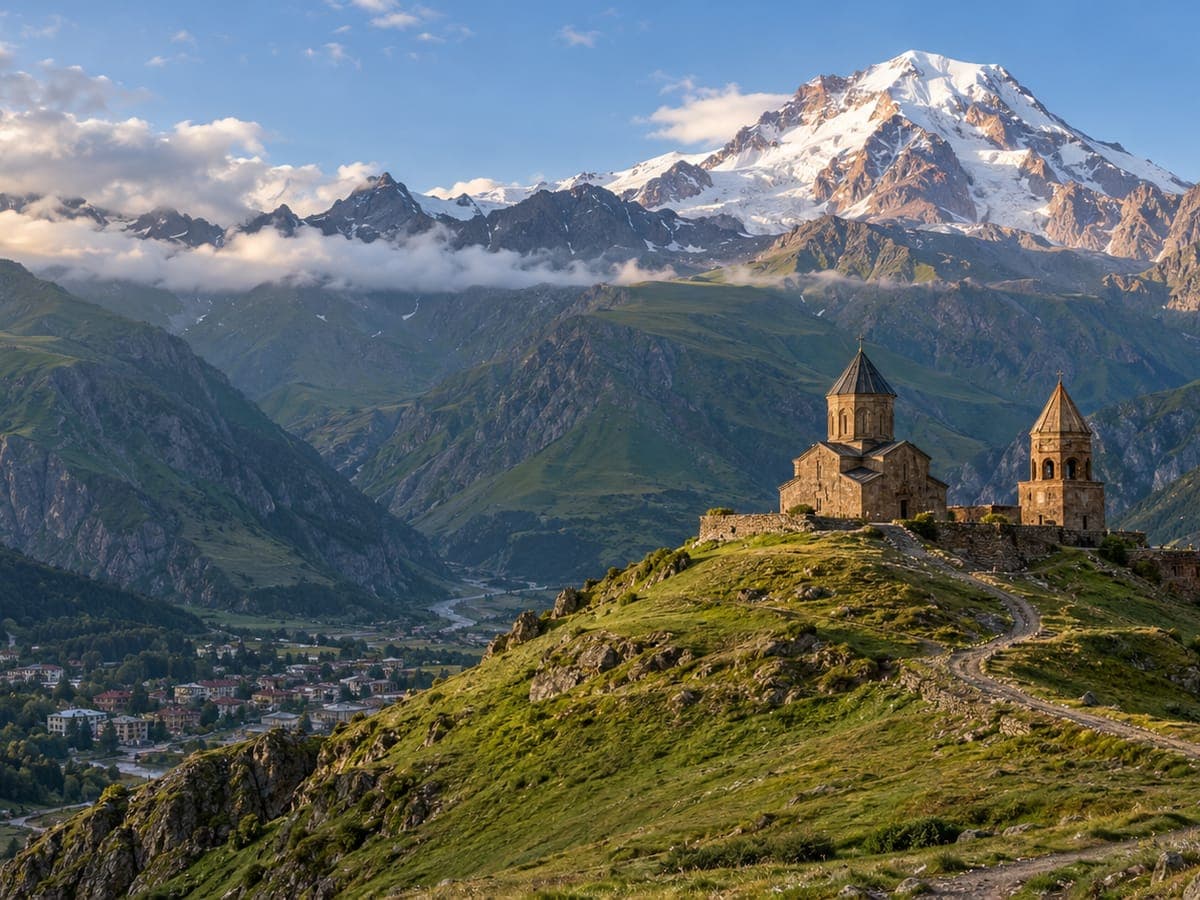
Gergeti Trinity Church on a grassy ridge above Stepantsminda, with the snow-covered summit of Mount Kazbek rising behind it.
Stepantsminda343

Kazbegi Travel Guide: Gergeti Trinity Church, Things to Do, How to Get There and Best Time to Visit

Kazbegi and Stepantsminda are the same place: a mountain town at about 1,740 metres beneath Mount Kazbek, north of Tbilisi on the Georgian Military Highway. Gergeti Trinity Church is the image the region is known by, and this guide is as much about the valleys around it. This guide covers how to get there, what the walk up to Gergeti actually involves, when the mountain is visible, which valleys XTOUR would give a full day and what its record says about vehicles, and why the road can close in winter.

Sep 2026

Read guide
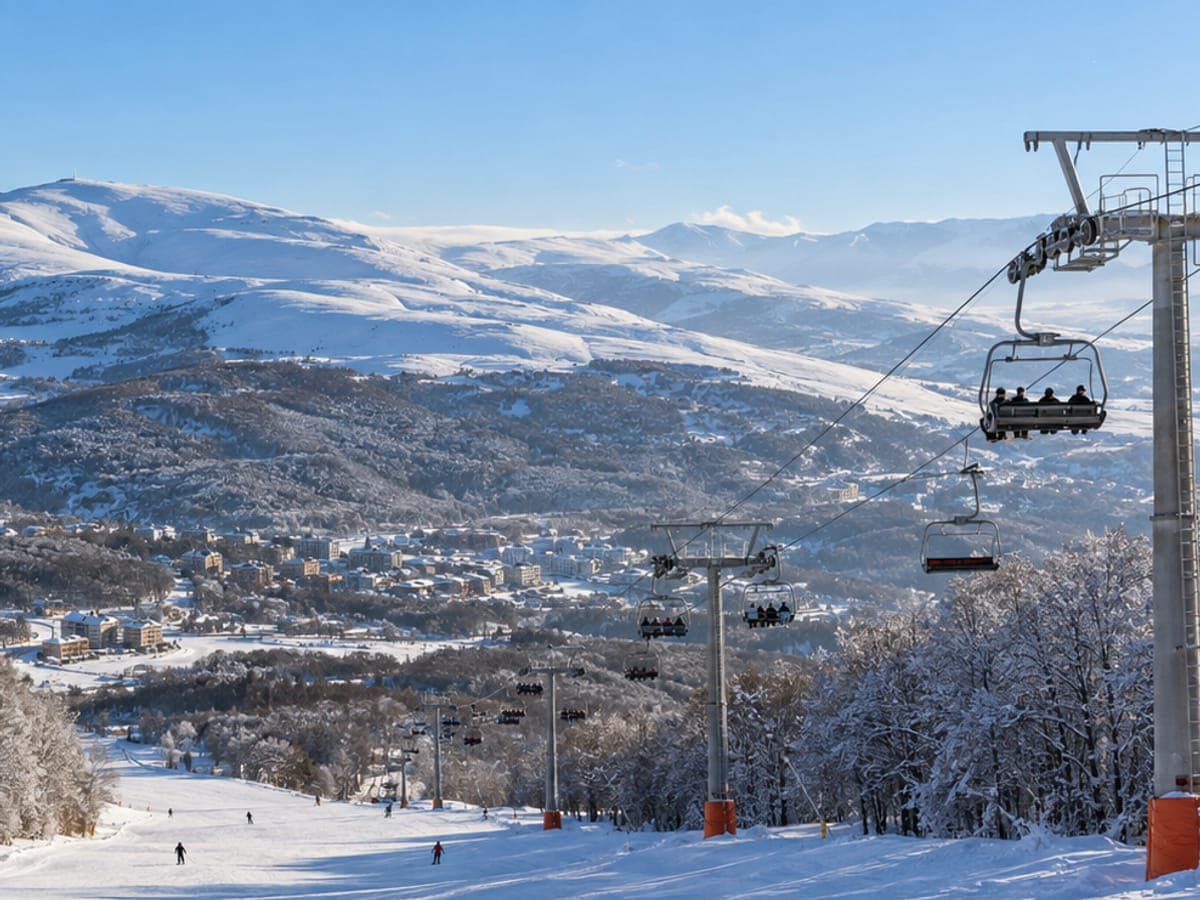
A groomed ski run at Tsaghkadzor with skiers descending, a chairlift passing overhead and the snow-covered town in the valley below.
Tsaghkadzor344

Tsaghkadzor Travel Guide: Skiing, the Ropeway and Summer in the Mountains

Tsaghkadzor is Armenia's main ski resort and, for eight months of the year, something quite different: a forested mountain town close to Yerevan with a medieval monastery and a ropeway that runs for the view rather than the snow. Treating those as one destination is why some visitors arrive disappointed. This guide separates the winter resort from the summer town, and is careful about lift operation, which no guide can promise.

Sep 2026

Read guide
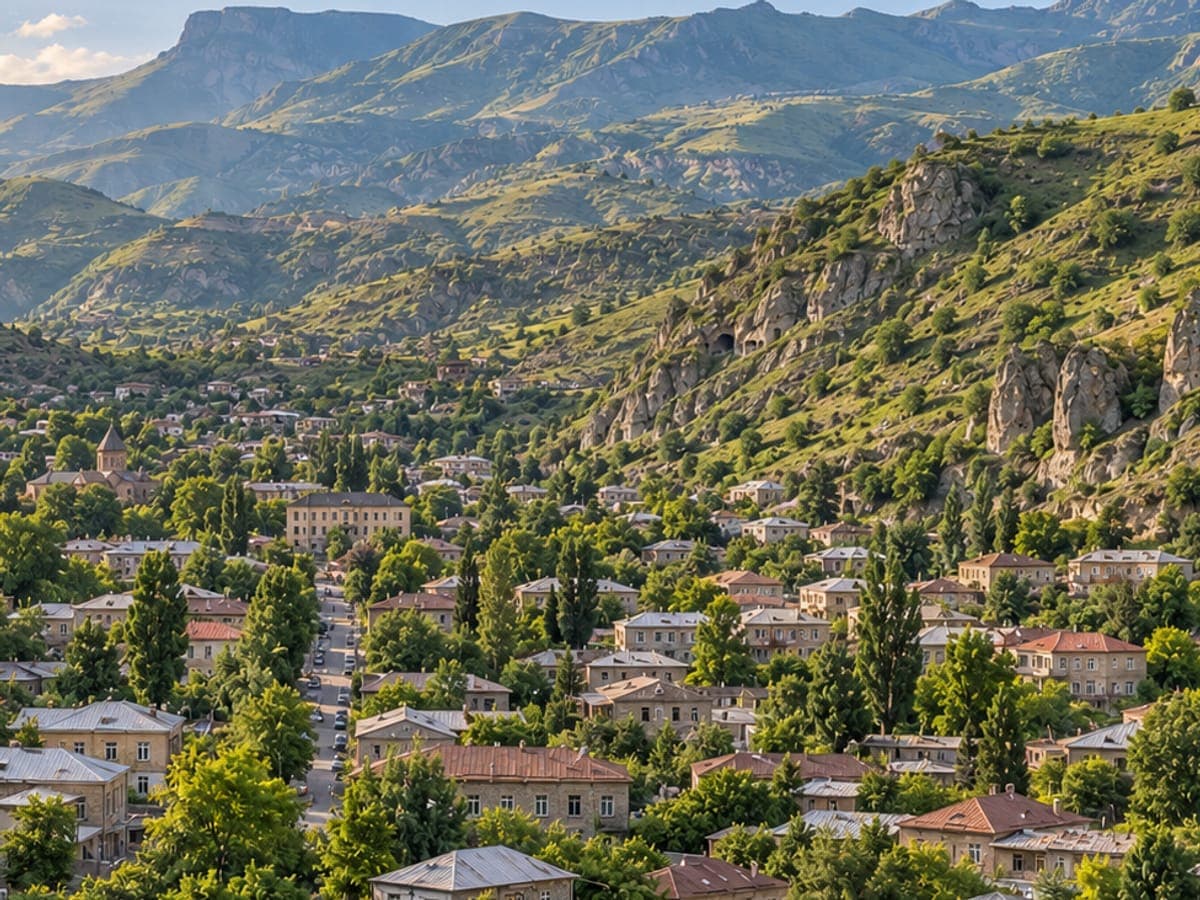
The town of Goris on its valley floor, red-roofed houses set among trees, with eroded rock pinnacles on the slopes above.
Goris345

Goris Travel Guide: Using Syunik's Best Base for Tatev and Khndzoresk

Goris is a handsome nineteenth-century grid town in a bowl of eroded rock pinnacles, and its real function for travellers is as the base for southern Armenia. Tatev and Khndzoresk are excursions from it, not attractions in it. This guide sets out a realistic two-day southern loop, how to handle the cableway's operating pattern, and what current official travel advice actually says about the border — which is narrower and more specific than most summaries suggest.

Sep 2026

Read guide
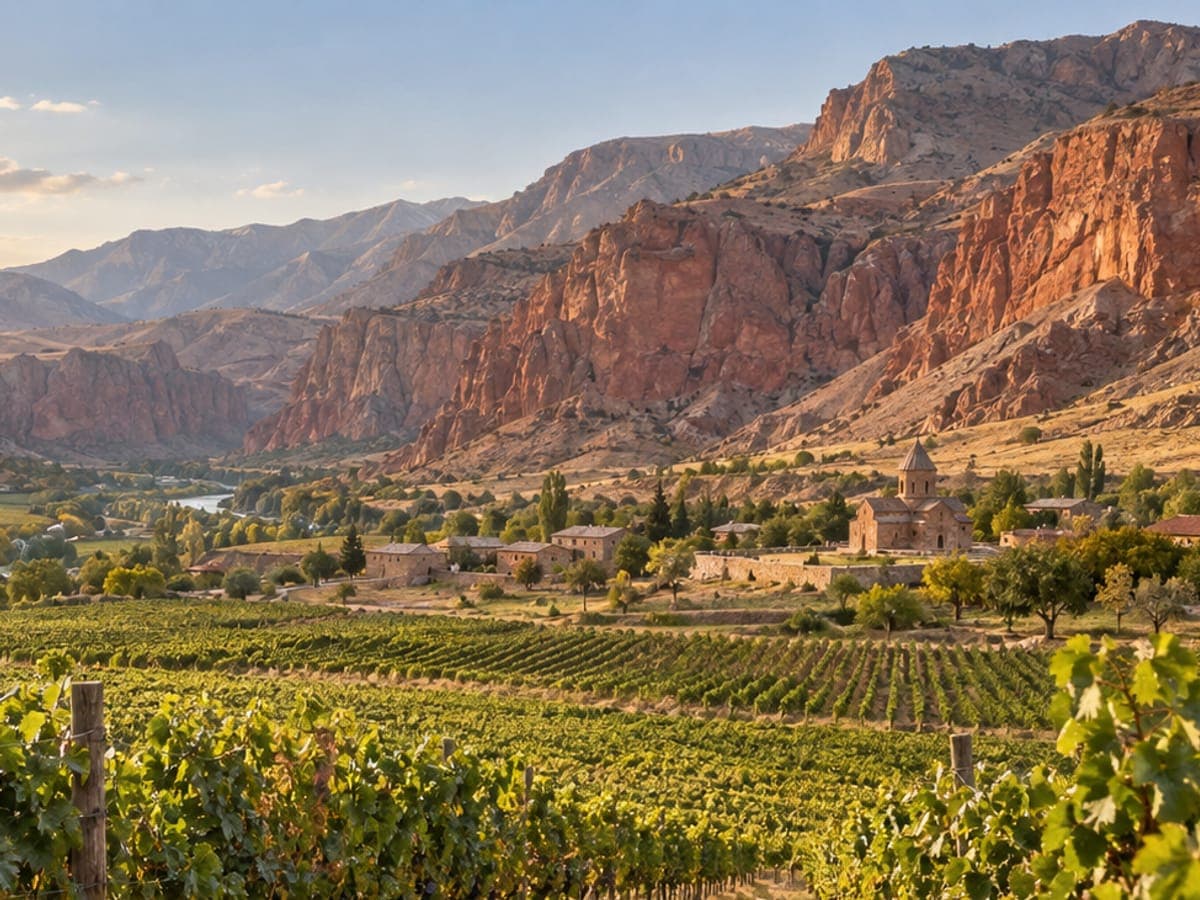
Rows of dark grapes on the vine above the Areni valley at sunset, with red rock cliffs rising behind a village in the distance.
Areni346

Areni Travel Guide: The Cave, the Wineries and Noravank

Areni is a village in Vayots Dzor with an outsized claim on the history of wine: a cave on its edge produced the earliest known winemaking installation, dated to around 4100 BC. It is also the gateway to Noravank and the centre of a small wine region built on an indigenous red grape. This guide sets out precisely what the archaeology does and does not establish, how to visit wineries without driving afterwards, and whether Areni is a stop or a stay.

Sep 2026

Read guide
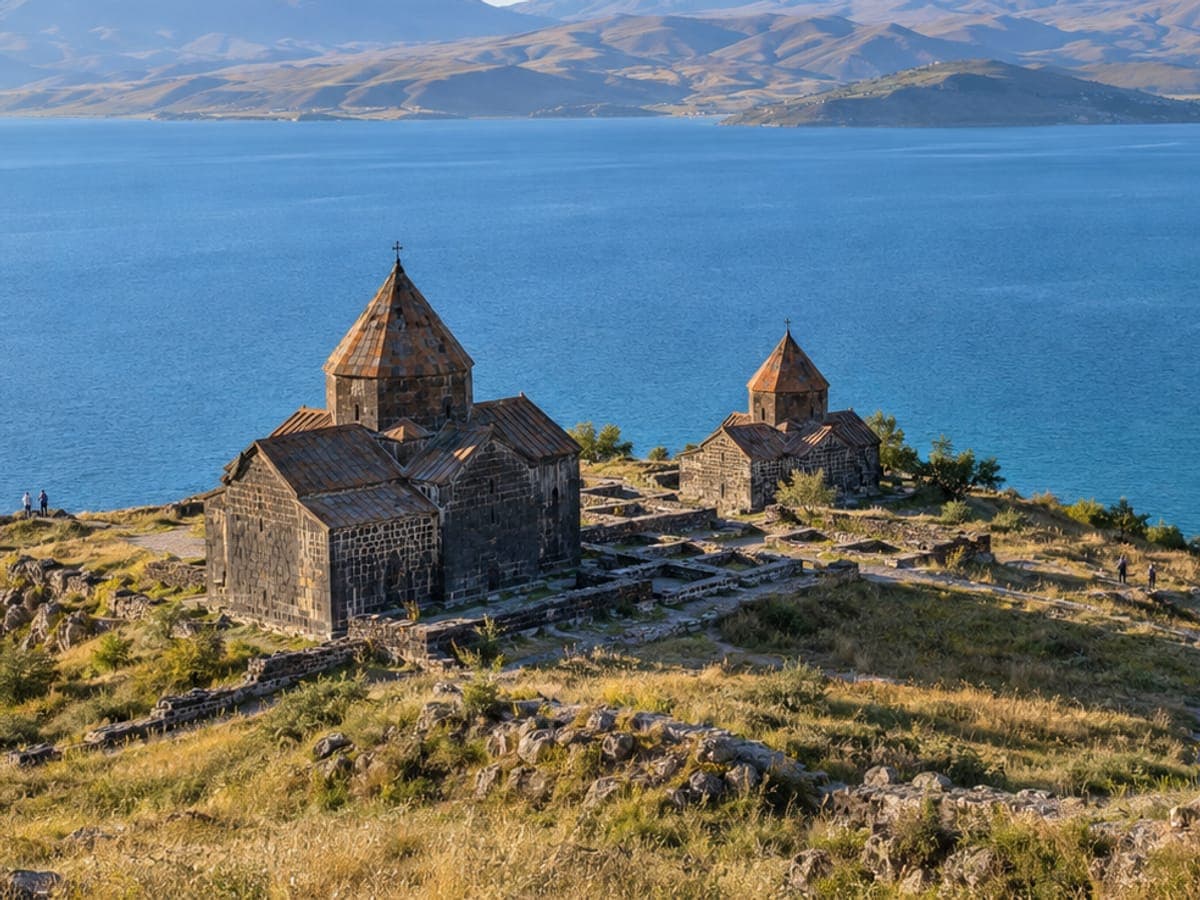
The two stone churches of Sevanavank on a grassy headland above the blue water of Lake Sevan, with bare mountains along the far shore.
Sevan347

Lake Sevan Travel Guide: Sevanavank, Beaches and How the Lake Is Organised

Lake Sevan is not one attraction but a body of water roughly the size of a small country's coastline, and the single biggest planning error is treating it as a place you arrive at. Sevan town, the Sevanavank peninsula and the wider shore are different visitor geographies with different reasons to go. This guide separates them, sets out when swimming is actually pleasant, and handles the lake's real environmental situation without either alarmism or silence.

Sep 2026

Read guide
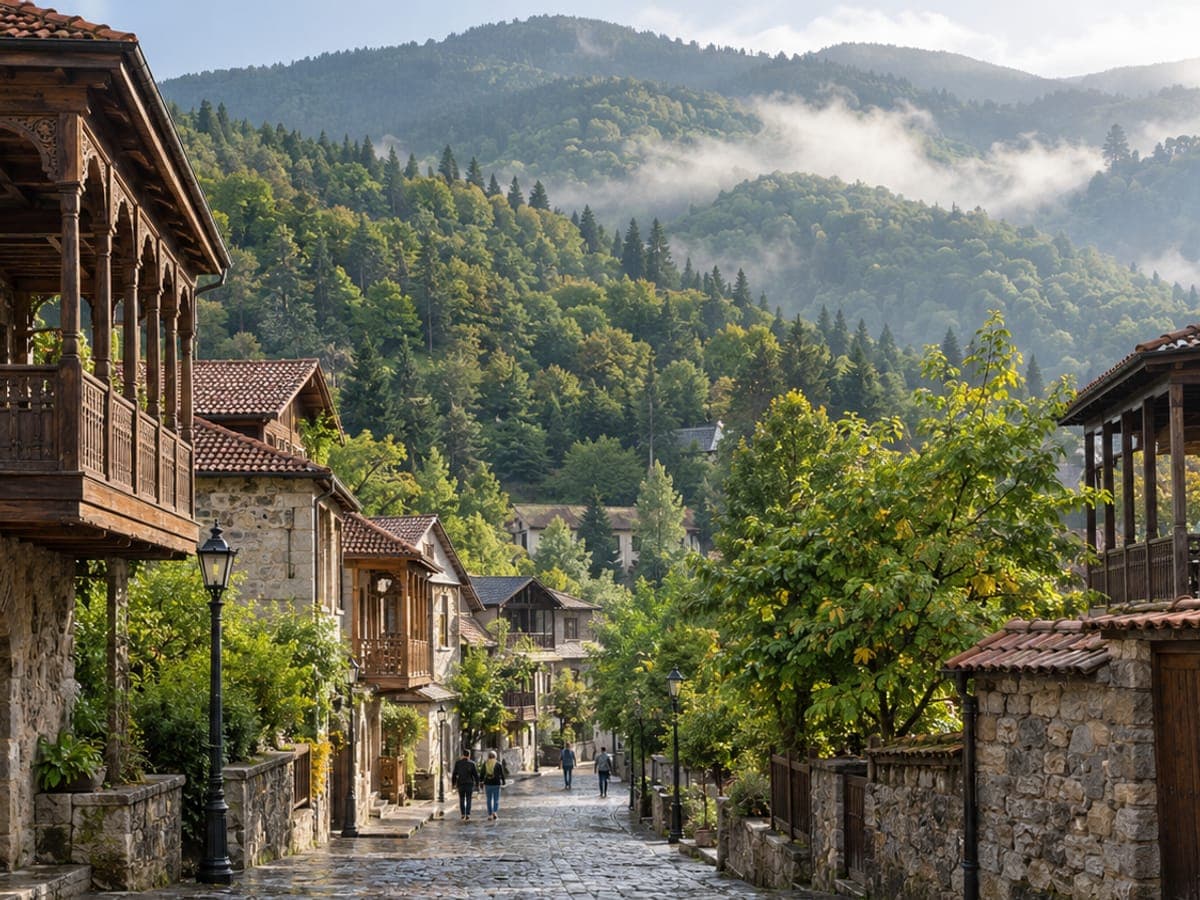
Stone houses with carved wooden balconies along a wet cobbled street in Dilijan, with forested mountains and low cloud behind.
Dilijan348

Dilijan Travel Guide: Monasteries, Hiking and Whether to Stay the Night

Dilijan is three things that visitors routinely conflate: a small resort town with a restored craft street, a forested national park with real trails, and a wider Tavush region holding the monasteries that are the real reason to come. Getting that distinction right is the difference between a satisfying day and a frustrating one. This guide separates the sightseeing visit from the hiking visit, and is honest about which trails need navigation rather than optimism.

Sep 2026

Read guide
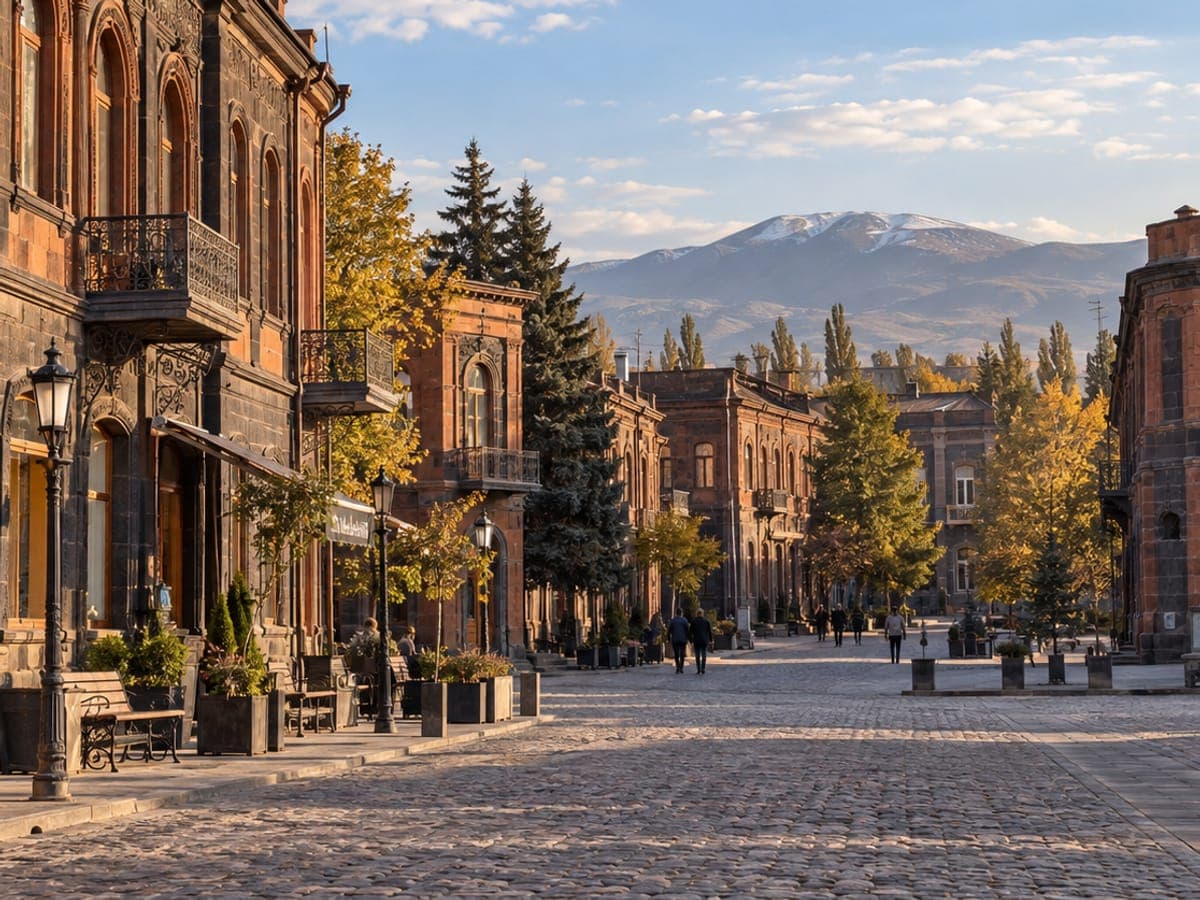
A cobbled street in Gyumri lined with nineteenth-century stone buildings and iron balconies, autumn trees along the pavement and a snow-dusted mountain beyond.
Gyumri349

Gyumri Travel Guide: Day Trip or Weekend, and What to See

No other Armenian city looks like Gyumri. It kept a whole nineteenth-century quarter of black and orange tuff through the Soviet century, and a place still visibly shaped by the 1988 earthquake. The express train from Yerevan makes a day trip realistic. A night makes it a better one. This guide sets out a walking route through Kumayri, how the train compares with the road, and how to approach the earthquake with the seriousness it deserves.

Sep 2026

Read guide
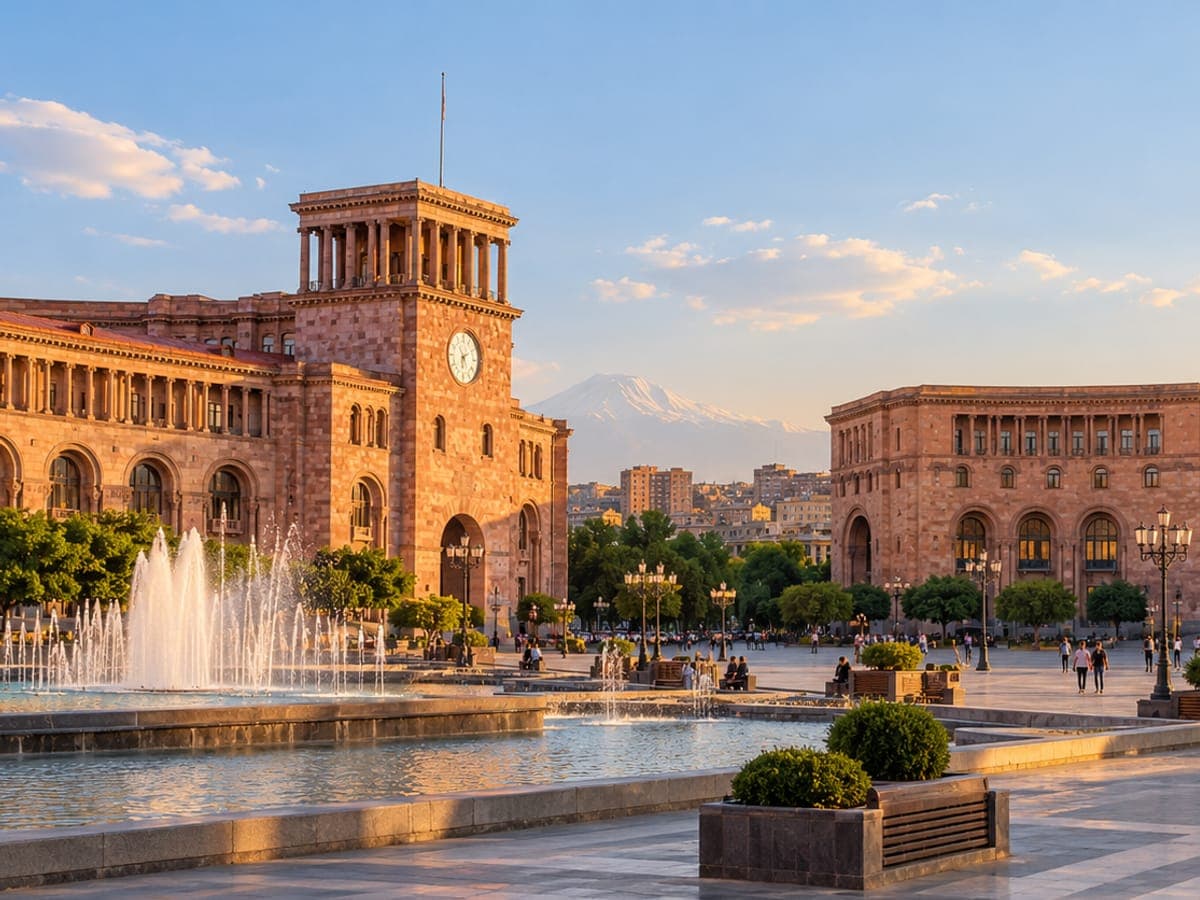
Republic Square in Yerevan in evening light, its fountains running in front of tuff-stone buildings and the clock tower, with a snow-capped peak on the far horizon.
Yerevan350

Yerevan Travel Guide: How Long to Stay, What to See and Getting Around

Yerevan rewards two to three days: a compact pink-tuff centre you can walk end to end, a handful of museums that are genuinely worth the time rather than box-ticking, and a café and wine culture that is the real reason people stay longer than they planned. It is also the base XTOUR's guides use for excursions across the country. This guide covers how the city divides up, the transport system that stopped taking cash, and what each destination's own record says about a trip from the capital.

Sep 2026

Read guide
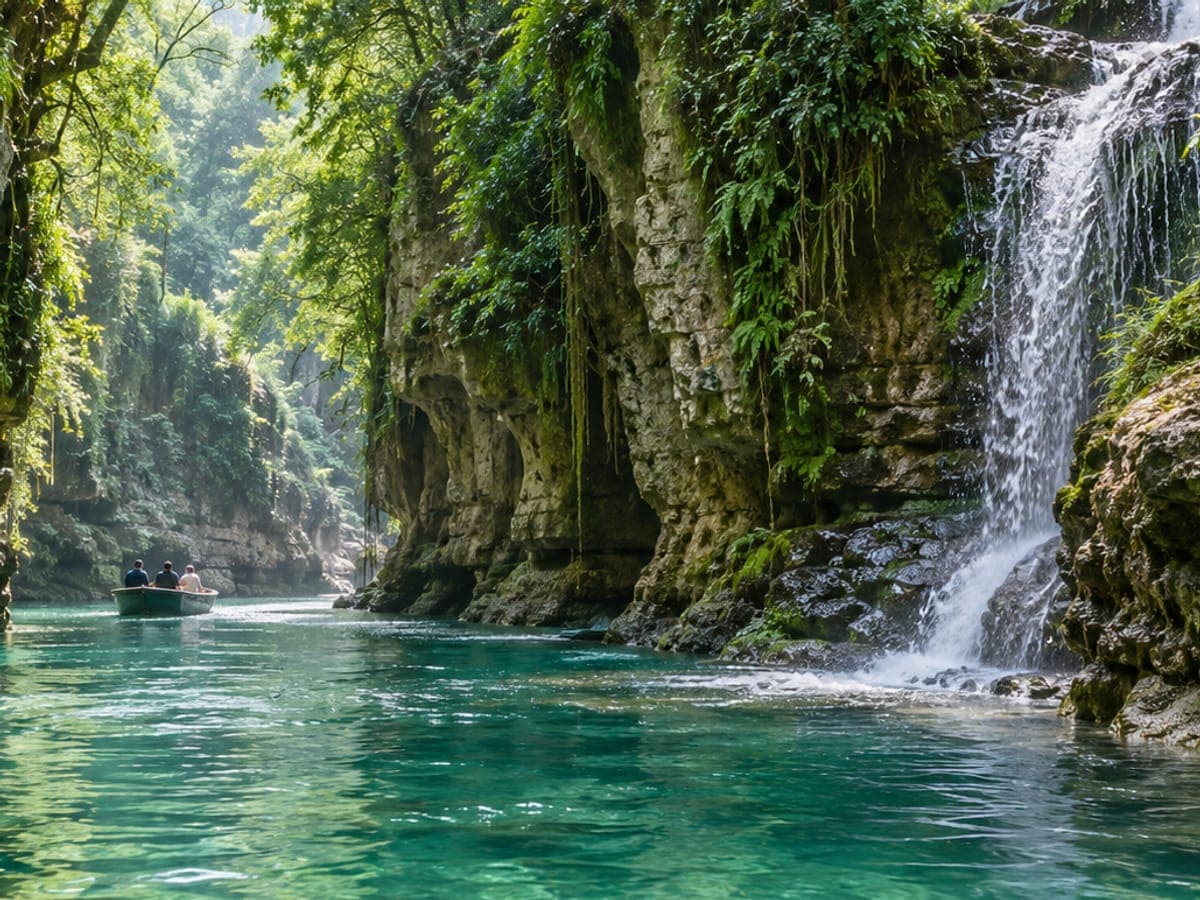
Turquoise water between the mossy limestone walls of Martvili Canyon, a waterfall falling on the right and a small boat of visitors upstream.
Martvili351

Martvili Canyon Guide: Tickets, Boat Ride, Best Time and How to Get There

Martvili Canyon is a short, managed canyon visit in western Georgia: a 700-metre paved loop above the Abasha River, plus an optional boat ride through the narrow water-level section. It is genuinely photogenic and takes about ninety minutes. It is not a wilderness hike, you cannot swim in it, and the boat stops running in bad weather. This guide sets out what it costs now that prices have risen, when the water actually looks turquoise, how to reach it from Kutaisi, Batumi or Tbilisi, and how it compares with Okatse.

Sep 2026

Read guide
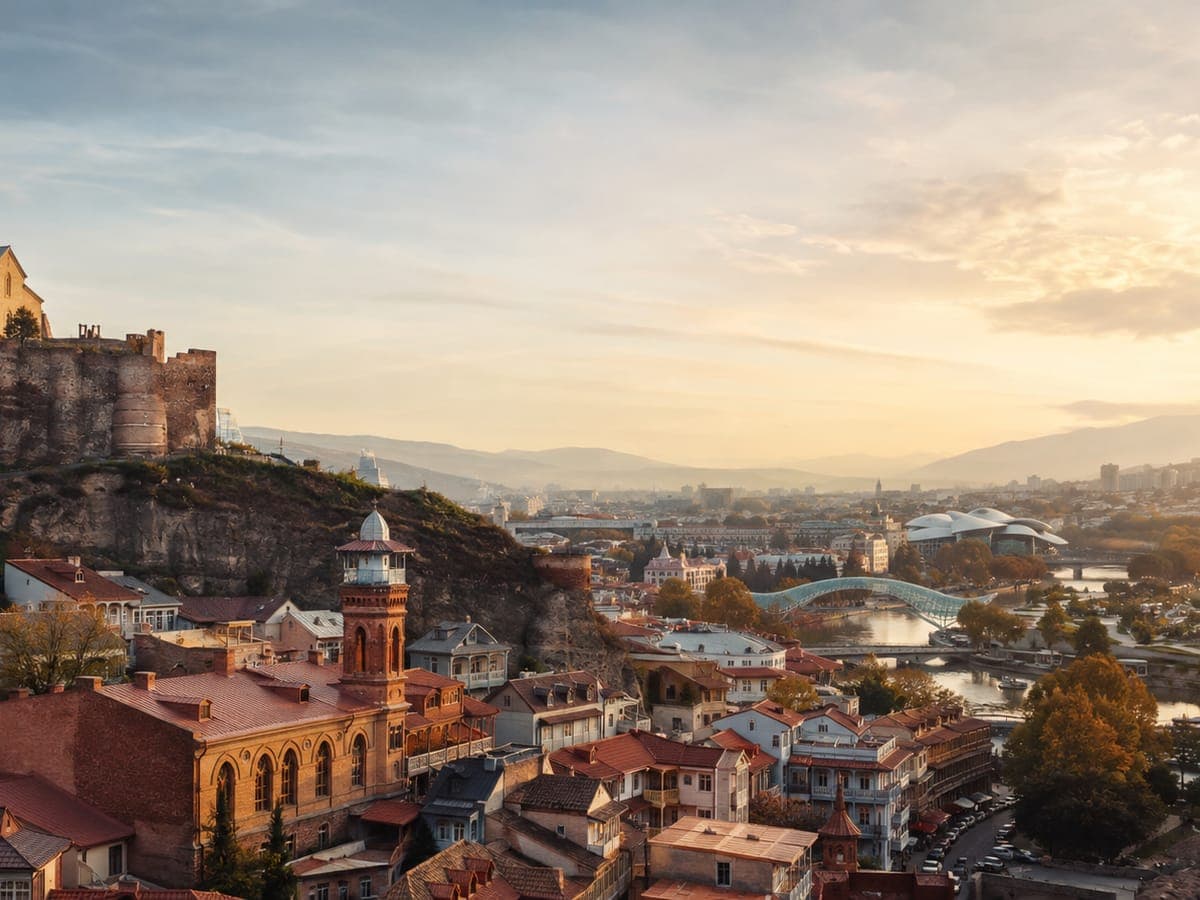
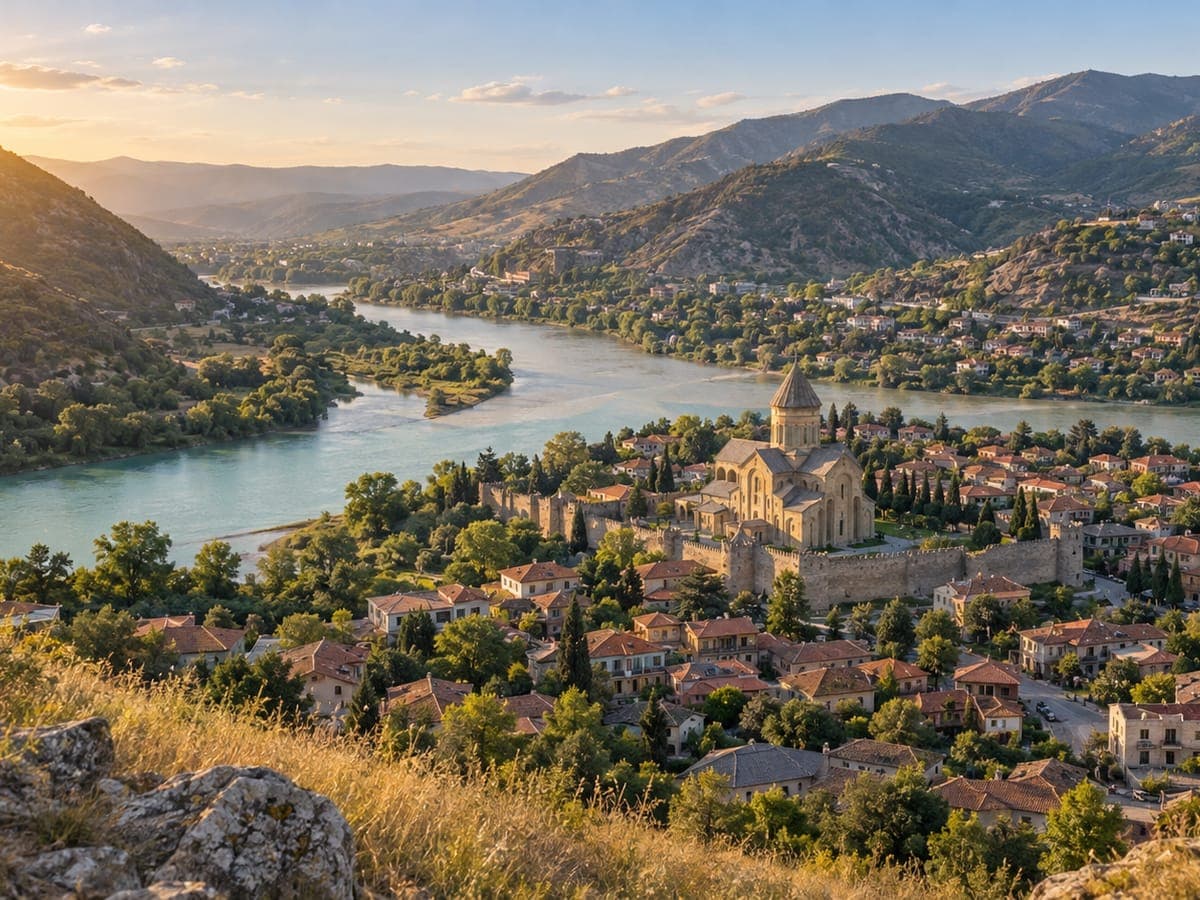
Mtskheta seen from the hillside above, the walled Svetitskhoveli Cathedral at the centre of the red-roofed town where two rivers meet.
Mtskheta352

Mtskheta Day Trip from Tbilisi: How to Get There, What to See and How Long You Need

Mtskheta sits about twenty kilometres from Tbilisi and is, in XTOUR's editorial view, the easiest worthwhile day trip in Georgia; according to Wander-Lush, a minibus from Didube costs around two lari and takes half an hour. The catch is geography. Svetitskhoveli and Samtavro are a short walk apart in the town centre, but Jvari stands across the rivers on a hill and needs a vehicle, and Shio-Mgvime is a separate excursion up a gorge road. This guide sets out how to get there, how long each stop actually takes, four itineraries that work, and the mistakes that turn a good half day into a frustrating one.

Sep 2026

Read guide
Mtskheta seen from the hillside above, the walled Svetitskhoveli Cathedral at the centre of the red-roofed town where two rivers meet.
Mtskheta353

Christian Pilgrimage in Mtskheta: Churches, Saints, Relics and Feast Days

Four sacred sites sit within a few kilometres of each other at Mtskheta: the cathedral where Georgian tradition places the robe of Christ, the convent holding the relics of St Gabriel Urgebadze and the traditional tombs of the first Christian king and queen, the hilltop church built where St Nino's cross is said to have stood, and a gorge monastery around the cave where St Shio was buried. This guide sets out which saint belongs to which place and on what evidence, when the major feasts fall and what actually happens on them, and how a visitor of any belief should behave in churches where other people are praying.

Sep 2026

Read guide
Mtskheta354

Shio-Mgvime Monastery Guide: St Shio, Cave Monasticism and the Mtskheta Gorge

Shio-Mgvime is a working monastery in a limestone gorge outside Mtskheta, built around the cave where St Shio, one of the Thirteen Assyrian Fathers of Georgian tradition, spent the end of his life and where Georgian sources say he was buried at his own instruction. More than a hundred rock-cut cells survive in the cliffs around it, and a clay-pipe aqueduct chronicled in 1202 shows that the community was engineered rather than improvised. This guide separates the cave from the grave from the relics, sets out the building chronology with its genuine source conflicts, and covers the practical business of getting up a dead-end gorge road.

Sep 2026

Read guide
Mtskheta355

Samtavro Monastery Guide: St Nino's Bramble, the Royal Tombs and St Gabriel's Relics

Samtavro is a working convent in Mtskheta and one of the three component monuments of the UNESCO-listed Historical Monuments of Mtskheta. A living bramble is preserved at the traditional site of St Nino's prayer place, fenced and signed against picking; two tombs inside the church are traditionally identified as those of King Mirian III and Queen Nana; and the relics of St Gabriel Urgebadze rest here, the twentieth-century fool-for-Christ who burned a portrait of Lenin and died in a tower in the courtyard in 1995. This guide separates what is documented from what is tradition, explains the difference between a grave and a reliquary, and covers the practical business of visiting a working convent.

Sep 2026

Read guide
Mtskheta356

Jvari Monastery Guide: St Nino's Cross, the Great Church and Visiting Mtskheta's Hill

Jvari stands on the rock above the meeting of the Mtkvari and Aragvi rivers and is one of the most important buildings in Georgian architectural history, yet it is easy to treat it as a viewpoint with a church attached. This guide explains what the building actually is: the fourth-century cross tradition that made the hill sacred, the small church that came first, the Great Church of around 590 to 605 and the four inscriptions that date it, the tetraconch plan that made Jvari a model for later Georgian architecture, and the honest practical business of getting up there, including why walking from Mtskheta is a worse idea than it looks.

Sep 2026

Read guide
Mtskheta357

Svetitskhoveli Cathedral Guide: History, Christ's Robe, Sidonia and the Life-Giving Pillar

Svetitskhoveli in Mtskheta is the historic cathedral of the Georgian Orthodox Church and the building most closely bound to Georgia's conversion to Christianity. This guide separates what the building demonstrably is from what Georgian Orthodox tradition holds about it: the eleventh-century cathedral and its architect, the three churches that stood on the site before it, the tradition of Christ's robe and the woman buried holding it, the two different Sidonias that popular accounts merge into one, the Life-Giving Pillar and the seventeenth-century canopy that marks it, the royal tombs in the floor, and the practical business of visiting an active cathedral respectfully.

Sep 2026

Read guide
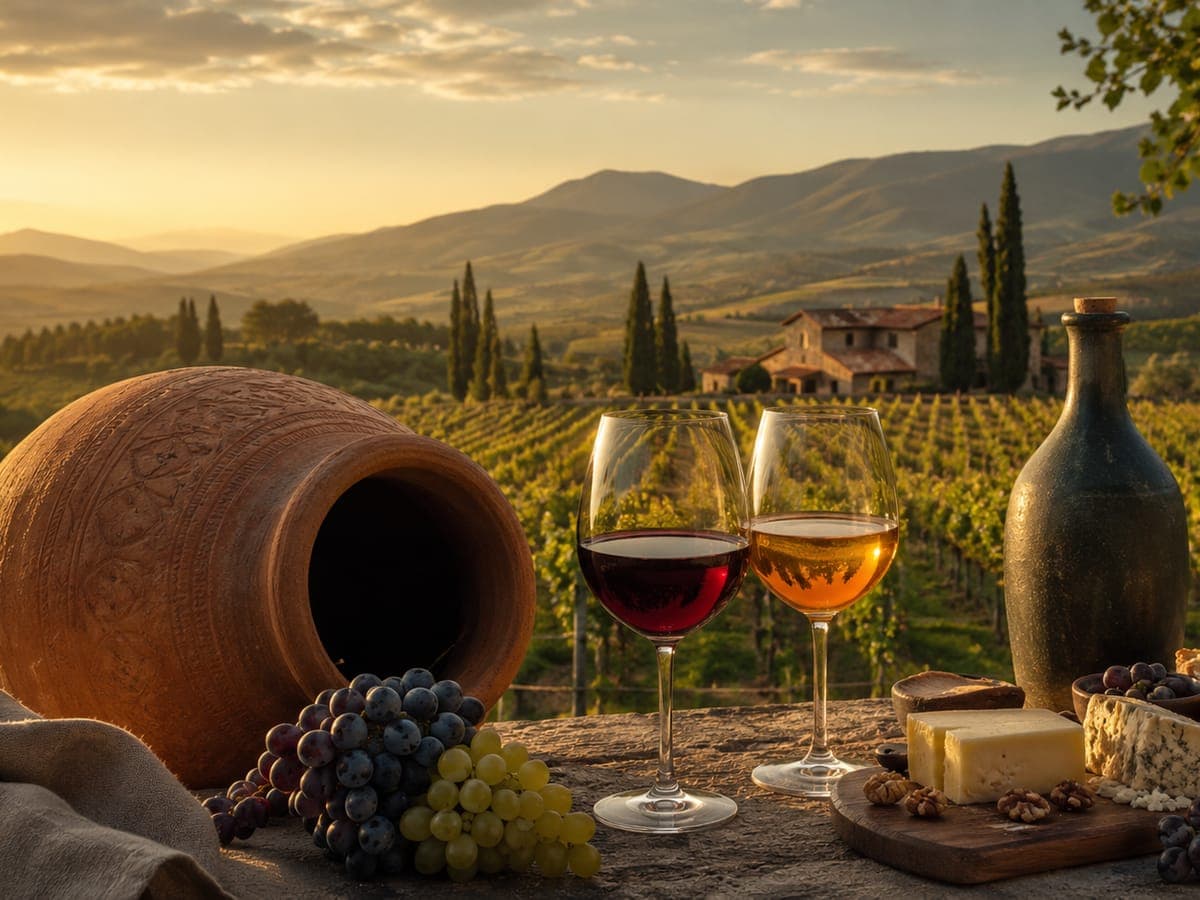
A clay qvevri, glasses of red and amber wine, grapes, cheese and bread on a stone table above rows of vines at sunset.
Telavi358

Georgian Wine Guide: What to Drink, Regions, Grapes, Qvevri & Buying Advice

Georgia has one of the world's oldest documented winemaking traditions, hundreds of indigenous grape varieties and a wine vocabulary that can be confusing even for experienced drinkers. This guide explains what Georgian wines to try, how qvevri wine differs from conventional wine, the major regions and grapes, famous names such as Saperavi, Kindzmarauli and Khvanchkara, and how to buy and taste wine intelligently while traveling in Georgia.

Sep 2026

Read guide

Our standard

Useful enough to plan with. Beautiful enough to wander through.

Practical

Timing, transport, costs, accessibility and what travelers actually need to know.

Considered

We focus on what deserves your attention rather than simply producing longer lists.

Current

Travel changes. Important facts are designed to be reviewed, verified and updated.

Explore differently

The world does not need another checklist. It needs better reasons to go.