Lake · Samtskhe-Javakheti
Tabatskuri Lake
A high lake at 2,000 metres in Samtskhe-Javakheti holding some 221 million cubic metres of water, with Tabatskuri village built out on a small peninsula along its shore.
14 km in a straight line
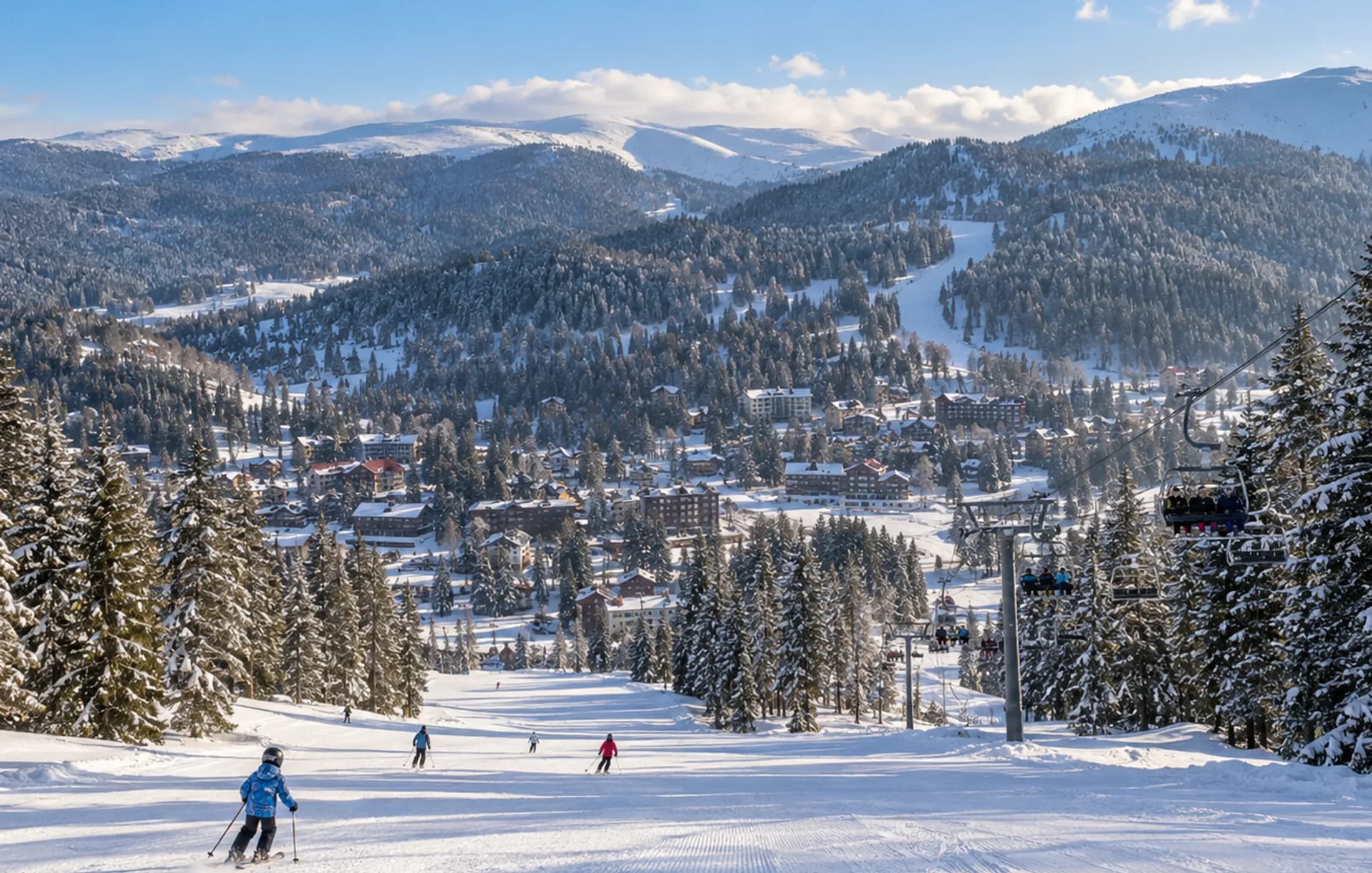
Illustration — not a photograph of this place
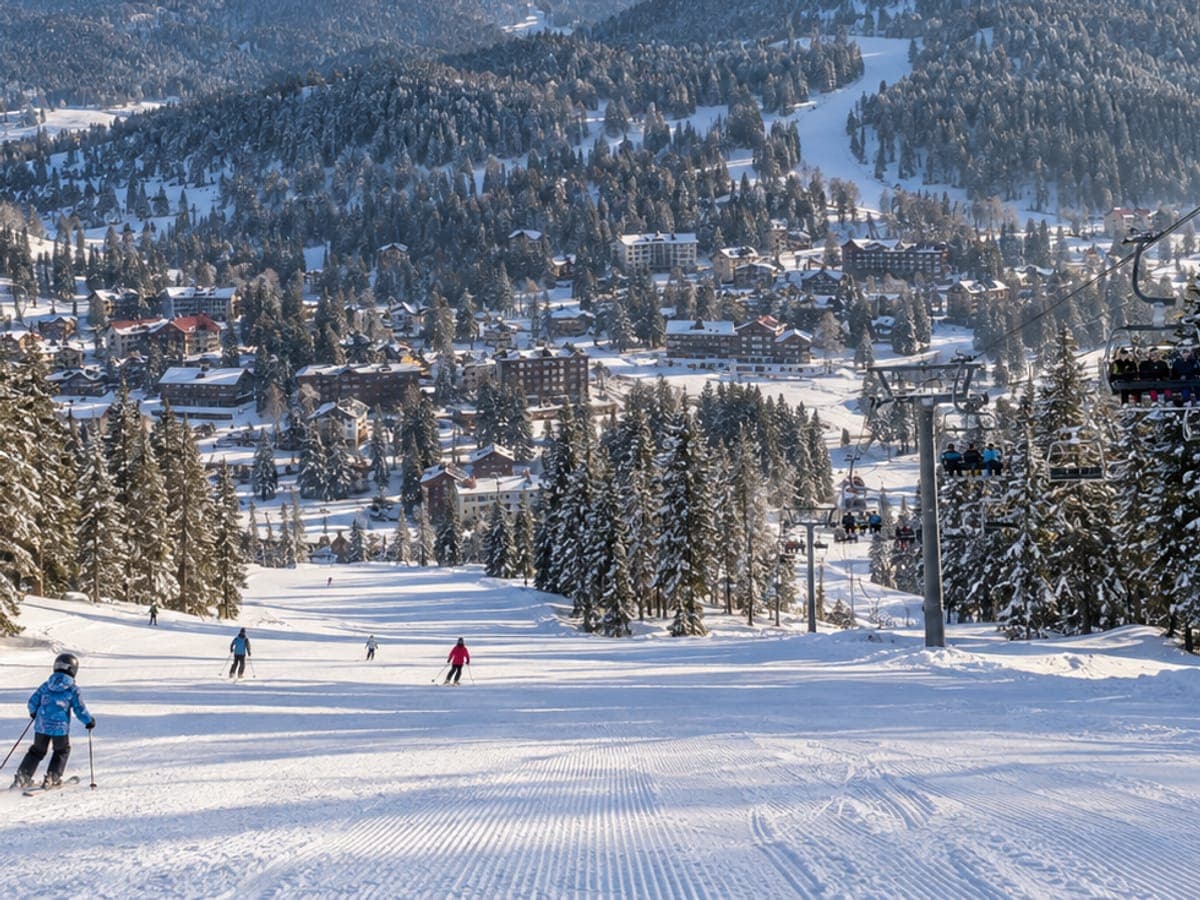
Bakuriani is one of Georgia's oldest mountain resorts, combining family-friendly skiing, the higher Didveli, Kokhta and Mitarbi ski areas, pine forests, winter activities and a surprisingly active summer season in the Trialeti Range.
Country
Georgia
Type
Mountain and Ski Resort
Walking
difficult
Where it is
41.7508, 43.5283
Understand the place
Not only where to go, but what to eat, what things cost, what visitors get wrong, how accessible Bakuriani is, which scams to recognize and what is genuinely worth your time.
Planning your visit
December through March is the broad ski-season planning window, with January and February generally offering the strongest winter atmosphere. Documented opening dates and individual ski-area operation vary by snowmaking, natural snow and elevation, so historical dates are context rather than a promise for the next season. June through September is excellent for cooler mountain weather, hiking, cycling, horseback riding and family activities. Spring and late autumn are quieter transition periods when some seasonal businesses and lifts may be closed.
3–5 nights works well for a family winter holiday or beginner ski trip. Experienced skiers can also use Bakuriani for several days by moving between Didveli, Kokhta and Mitarbi. In summer, 2–3 nights is usually enough for forest walks, lifts, cycling and a Borjomi combination.
Choose accommodation by the ski area or activity you expect to use most rather than simply by the word 'Bakuriani.' Didveli is convenient for many families and beginners, Kokhta suits travelers prioritizing steeper skiing and ski-in/ski-out properties, while central Bakuriani is better for restaurants, shops and non-ski activities. Mitarbi is quieter and more spread out. Always check the exact walking or driving distance to the lift you intend to use.
Bakuriani is spread across several ski zones. A hotel that is convenient for Kokhta may not be convenient for Didveli, and vice versa.
Snow coverage, wind, maintenance and seasonal conditions can affect individual lifts and trails. Check current Mountain Trails Agency information rather than relying on an old resort map.
Bakuriani is especially popular with families, so good instructors and convenient lesson times can fill quickly during school holidays and weekends.
The historic Borjomi-Bakuriani narrow-gauge railway is an important part of local heritage, but passenger operation has been suspended. Confirm current status before treating it as transportation.
Bakuriani is one of Georgia's most popular domestic winter destinations and can become extremely busy during holiday periods.
The complete guide
Start with the parts of Bakuriani that matter most to your trip, then move into the practical details.
Experiences & attractions
Attractions, experiences and places actually worth your time.
Eat like you understand the place
Signature dishes, local drinks, markets and eating well.
Where to stay & explore
Where to stay, wander and choose the right area for your trip.
Beyond the destination
Nearby places worth a day out from here.
Bring home the right things
What is genuinely worth buying and where to look.
After dark
What the evenings are like, and where to spend them.
Family travel
Family logistics, strollers, transport and practical planning.
When to go
When to visit and what the seasons really feel like.
Know before it happens
Common tourist traps and how to avoid them.
Money & budgeting
Budgets, payments and everyday prices.
Transport
Public transport, taxis, walking and common pitfalls.
Travel for more people
Mobility, transport and sensory accessibility.
Understand before you arrive
Local expectations, religion and visitor etiquette.
The details that matter
Connectivity, health, photography and useful local details.
Find your fit
Solo, women alone, older visitors, LGBTQ+, pets, remote work, budget and luxury.
Travel that holds up
Tourism pressure, supporting local people and animal welfare.
Things to do
Bakuriani's largest and most widely used ski sector, with gondola and chairlift access, beginner-to-advanced terrain and high stations reaching roughly 2,700 metres. It is particularly popular with families and intermediate skiers.
One of Bakuriani's historic ski mountains and a more technical alternative to the gentler family zones. Kokhta is known for steeper intermediate and advanced runs, forest scenery and direct access from several ski-oriented hotels.
A quieter ski sector connected with the Kokhta-Mitarbi development, offering longer alpine terrain and a less concentrated resort atmosphere than central Didveli.
A long-established recreation area in central Bakuriani used for walking, children's activities and casual winter entertainment.
Dense coniferous forest surrounding the resort is one of Bakuriani's defining characteristics and makes simple walking through the area enjoyable even for travelers who do not ski.
A newer resort cluster linking modern hotels, ski infrastructure and access toward the Kokhta and Mitarbi mountains.
Food & drink
Bakuriani is a mountain resort rather than a distinct culinary region of its own. Its food scene combines Georgian comfort food, Meskhetian influences from Samtskhe-Javakheti and ski-resort restaurants. Travelers should look beyond generic resort menus toward regional foods associated with nearby Borjomi and Meskheti.
A distinctive southern Georgian form of khachapuri made with thin layers of dough and cheese, traditionally associated with Meskheti rather than with Bakuriani specifically.
A filling mountain-style bread containing potato and cheese that works particularly well as cold-weather food after skiing.
Hot meat-filled dumplings are one of the most popular post-ski meals in Bakuriani, although they belong to Georgia's wider mountain culinary tradition rather than originating in the resort.
Salted and dried goose is one of the more unusual food traditions of Samtskhe-Javakheti and can appear in regional khinkali and other preparations.
A labor-intensive Meskhetian string cheese traditionally packed into clay vessels with cream and associated with southern Georgian food heritage.
Safety & tourist traps
Bakuriani is a family-oriented resort, but its most important risks remain mountain-related: skiing beyond ability, collisions on busy beginner slopes, icy roads, poor visibility, rapidly changing snow conditions and entering uncontrolled terrain without avalanche knowledge.
Low advertised prices may exclude helmets, better equipment categories or damage conditions.
Avoid it: Confirm every included item, equipment grade and return time before paying.
Someone who skis well is not automatically a qualified instructor, particularly for young children.
Avoid it: Use established ski schools or instructors with clear professional experience.
Short rides between central Bakuriani and ski areas can become expensive when demand is high.
Avoid it: Agree the price before departure or arrange hotel transport.
Shopping & souvenirs
Regional cheese, preserves and southern Georgian specialty products provide more local meaning than generic ski souvenirs.
Where to buy: Specialty shops and regional producers.
Mountain and forest honey is widely sold across Georgia and can make a practical food souvenir.
Where to buy: Local shops and reputable producers.
Bakuriani-themed ski and mountain souvenirs reflect the resort's long history as Georgia's oldest major ski center.
Where to buy: Resort shops and ski stores.
Money & costs
Georgia uses the Georgian lari (GEL). Cards are common in hotels, restaurants, supermarkets, rentals and lift-ticket infrastructure, but cash remains useful for taxis, smaller businesses and unexpected transport needs.
Transport
Bakuriani is spread across several resort zones rather than functioning as one compact ski village. Central streets can be walked, but Didveli, Kokhta and Mitarbi may require taxis, hotel shuttles or a car depending on your accommodation. Winter snow and ice make seemingly short walks much less convenient.
Accessibility
Bakuriani can provide a mountain experience for non-skiing travelers through hotels, forest scenery, gondolas and road-accessible viewpoints, but winter snow and ice create substantial mobility barriers throughout the resort.
Wheelchair access
Modern hotels may provide elevators and step-free interiors, but continuous wheelchair movement outdoors is difficult in winter.
Family travel
Bakuriani is one of Georgia's strongest family mountain destinations, with beginner slopes, children's instructors, snow play, tubing, parks and a large supply of family apartments and hotels.
What visitors get wrong
Family skiing is a major strength, but Kokhta, Mitarbi and upper Didveli also provide substantially more demanding terrain.
They are separate resort sectors, and accommodation location matters significantly.
Lift operation depends on snow coverage, wind, maintenance and official resort decisions.
The resort has an active warm-season identity with lifts, mountain recreation, forest walks and family holidays.
The narrow-gauge railway is an important heritage attraction, but passenger operation is currently suspended and road transport is the dependable connection.
Bakuriani is more forested and strongly family-oriented, with several separated ski sectors. Gudauri is higher, more open and particularly associated with freeride and large alpine terrain.
Traveler experiences
Traveler reviews will appear here after moderation.
Worth the drive
Distances are straight-line, not driving time — mountain roads in this region are often twice as long as the map suggests.
Lake · Samtskhe-Javakheti
A high lake at 2,000 metres in Samtskhe-Javakheti holding some 221 million cubic metres of water, with Tabatskuri village built out on a small peninsula along its shore.
Fortress · Atskuri, Samtskhe-Javakheti
A cliff-top fortress over the Mtkvari at Atskuri village, long a defensive post for the Borjomi valley, with a narrow tunnel cut down to the riverbank so the garrison could reach water during sieges.
Archaeological site · Avranlo, Kvemo Kartli
A cyclopean fortification of huge dry-laid stones on the Tsalka plateau, rising in three tiers above the Ktsia river beside the village of Avranlo and dated to the first millennium BC.
Archaeological site · Samtskhe-Javakheti
A megalithic stronghold of the second millennium BCE on the summit of Mount Shaori, 2,752 metres up north-west of Paravani Lake, built of large basalt blocks laid without mortar.
Park · Imereti
A large protected area of conifer and mixed forest in the Lesser Caucasus between Borjomi and Kharagauli, crossed by marked trails with tourist shelters and campsites.
Fortress · Khertvisi, Samtskhe-Javakheti
A tenth-century citadel and ring of walls on a rocky cape where the Paravani meets the Mtkvari, on the valley road between Akhaltsikhe and Vardzia.
Explore deeper
3 guides
There is no best month for Georgia, only a best month for a particular trip. This guide starts from the activity — city, coast, high mountain, harvest, ski — works backwards when the dates are already fixed, and keeps climate pattern, today's weather and whether anything is actually open as three separate questions.
Georgia is small on a map and slow on the ground, and the usual mistake is booking a week and planning three weeks of sightseeing. This guide works from the stay XTOUR recommends for each base — a minimum, and what the extra days buy — so you can decide how long you need by choosing bases rather than by counting sights.
Samtskhe-Javakheti has two landscapes: the Mtkvari river gorge, lined with fortresses and ending at the cave monastery of Vardzia, and the Javakheti volcanic plateau, whose lakes sit at around 2,000 metres. Five sites lie within 39.9 km of one another in a straight line, and the plateau has a hillfort of the second millennium BCE on a mountain summit.
Continue exploring